


















Research Finder
Find by Keyword
Should the AI Agent Security Problem Be Solved First?
Docker and E2B partnership tackles agent trust, security, and tool access via Model Context Protocol.
Key Highlights:
- Docker partnered with E2B to provide secure cloud sandboxes for AI agents.
- The collaboration aims to address two core risks: unsafe agent-generated code execution and securing external tool access.
- Every E2B sandbox now includes direct access to Docker’s Model Context Protocol (MCP) Catalog of over 200 real-world tools.
- Docker's MCP Gateway is the underlying mechanism that secures tool access and manages the catalog.
- This initiative represents a first step toward building a more secure and verifiable AI stack foundation for developers.
The News
Docker announced a new partnership with E2B, a company specializing in secure cloud sandboxes for AI agents. The collaboration is designed to enhance developer productivity by offering fast, secure access to hundreds of real-world tools. The core value proposition centers on leveraging E2B's isolated runtime environments combined with Docker's tooling for managing and securing connectivity via the Model Context Protocol (MCP). The partnership aims to build a trusted foundation for the next generation of AI applications. Find out more by clicking here to read the announcement blog.
Analyst Take
The announcement of Docker and E2B joining forces strikes me as a commendably focused effort to address the burgeoning security and operational concerns surrounding AI agents. We all recognize the prodigious capabilities of autonomous agents. They can write code, interact with external systems, and execute complex workflows. However, this power introduces a corresponding security exposure that is, frankly, breathtaking. The "move fast and break things" mentality simply cannot apply to AI agents that can access production databases, file systems, and external APIs. This partnership targets the critical junction of code execution safety and external connectivity risk, which are the twin towers of agent security vulnerability.
I see this move as Docker leveraging its foundational strength in containerization and isolation, the very solution that solved the "it works on my machine" and messy dependency problems for traditional applications, and applying it to the next generation of computing: AI agents. The current state of agent development is a bit like the Wild West of software development before containers became standard practice. Developers often resort to a variety of ad hoc and custom solutions, such as DIY isolation techniques and bespoke sandboxes, which inevitably slow them down and introduce inconsistencies. This creates friction, and friction is the enemy of productivity and secure deployment at scale. By standardizing the environment for both code execution and tool access, the partnership aims to reduce this friction significantly. This is a very smart pivot for Docker, moving beyond being the bedrock of DevOps to becoming the foundational layer for MLOps and agent development.
The focus on the Model Context Protocol (MCP) is particularly astute. MCP is rapidly becoming the standardized communication layer for connecting Large Language Models (LLMs) to external resources. However, every tool connected via MCP is a potential risk surface. As new MCP servers are introduced, they often bring with them challenges like supply chain risk, over-permissioned access, and vulnerability to injection attacks. The market desperately needs a secure, verifiable, and governed way to handle these connections. Docker and E2B aim to deliver this necessary layer of enterprise-grade control.
This is not just a technology integration; it is an effort to establish a new security baseline for the agent ecosystem. Developers should not have to be security experts to deploy an agent.
What was Announced
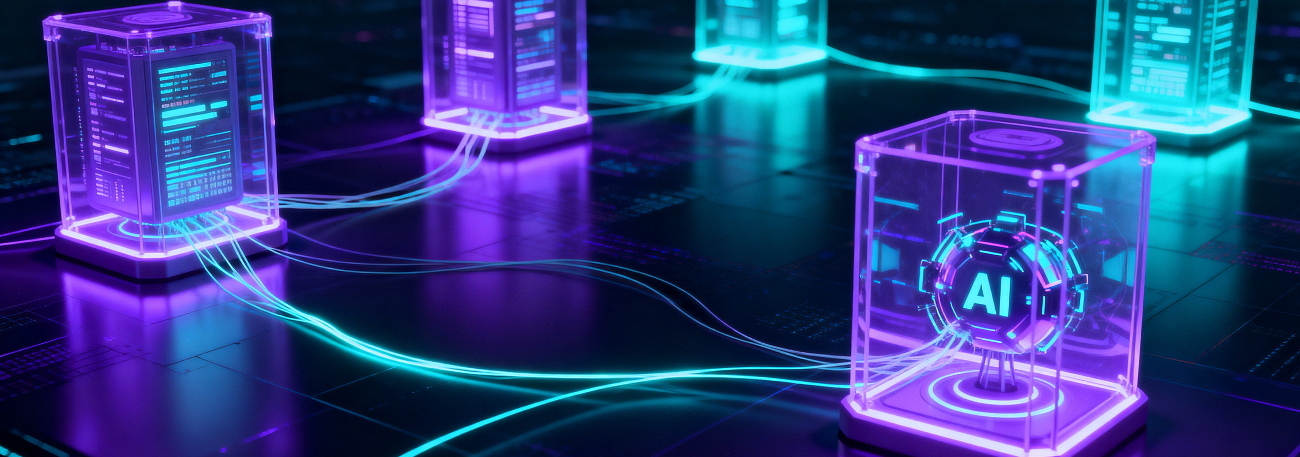
The partnership between Docker and E2B establishes an integrated system for developing and running secure AI agents. The core offering is the combination of E2B's specialized cloud sandboxes with direct access to Docker’s Model Context Protocol (MCP) Catalog via the Docker MCP Gateway.
E2B Cloud Sandboxes are designed to provide secure, isolated runtime environments for AI agent code execution. These environments function as small, ephemeral virtual machines that start rapidly, aiming to contain and limit the blast radius of any potentially unsafe or malicious code generated by the agent. This isolation is architected to protect the host infrastructure and sensitive data from unsecured AI-generated code.
Docker MCP Gateway acts as a secure enforcement point and a unified interface for agent-to-tool communication. It is designed to aggregate and manage multiple MCP servers. Key functions include providing centralized connectivity, which simplifies the agent's configuration, and enforcing security policies. The gateway is intended to verify the provenance of the MCP server container images and apply security constraints such as running the servers in isolated containers with minimal privileges, which addresses supply chain risks and potential vulnerabilities.
Docker MCP Catalog is a curated collection of over 200 real-world tools, including services like GitHub, Perplexity, Browserbase, and ElevenLabs. This catalog provides a standardized, presumably vetted, source of tools that agents can connect to. By accessing these tools through the Docker MCP Gateway, the integration aims to ensure that tool access is secure, verifiable, and governed. The entire setup aims to deliver a trusted mechanism for developers to run and connect their agents without being slowed down by security concerns or complex, custom isolation setups.
Looking Ahead
The industry is quickly moving from the novelty phase of AI agents to the practical, production phase. This shift makes security and governance paramount, and the Docker-E2B partnership is positioned well to capitalize on this inevitability. Their focus on standardizing the secure runtime and tool connectivity for agents is an ambitious and crucial undertaking.
The key trend that we are going to be looking out for is adoption, specifically among large enterprises that need to deploy hundreds of agents with a verifiable chain of custody for every action they take. The problem of securing LLM-generated code execution is only going to intensify as agents gain more sophisticated permissions. When you look at the market as a whole, the announcement today sets a clear, high bar for the competition. Other vendors—both infrastructure players and agent-specific platform providers, will need to match this level of integrated, opinionated security tooling.
Our perspective is that simply providing the underlying compute or the LLM is no longer sufficient. The value now resides in the surrounding platform layers that enable secure, scalable, and auditable deployment. This is the new control point in the agent architecture. Going forward we are going to be closely monitoring how the company performs on expanding the verifiable MCP Catalog and on providing deeper enterprise controls, such as granular role-based access to specific tools via the Gateway.

Steven Dickens | CEO HyperFRAME Research
Regarded as a luminary at the intersection of technology and business transformation, Steven Dickens is the CEO and Principal Analyst at HyperFRAME Research.
Ranked consistently among the Top 10 Analysts by AR Insights and a contributor to Forbes, Steven's expert perspectives are sought after by tier one media outlets such as The Wall Street Journal and CNBC, and he is a regular on TV networks including the Schwab Network and Bloomberg.