











Video and Podcasts

How Extreme Networks Is Helping Partners Win with AI and Managed Services
At Extreme Connect 2026, Ron Westfall of HyperFRAME Research speaks with Dewald Botha, Principal Sales Engineer at Extreme Networks, about how the company is helping its partners adapt to a rapidly changing networking market.
Dewald explains why Extreme Networks’ partner-first approach is built around relationships, customer outcomes, and technology that delivers practical value. He also discusses the company’s human-centered approach to AI, where intelligent systems support networking professionals rather than making every decision autonomously.
The conversation also explores Extreme Networks’ growing MSP program and the transition from traditional hardware sales toward managed services, subscriptions, consumption-based offerings, and hardware-as-a-service. As demand for outsourced IT support continues to grow, Extreme is giving partners the commercial models and capabilities they need to transform their businesses and compete more effectively.
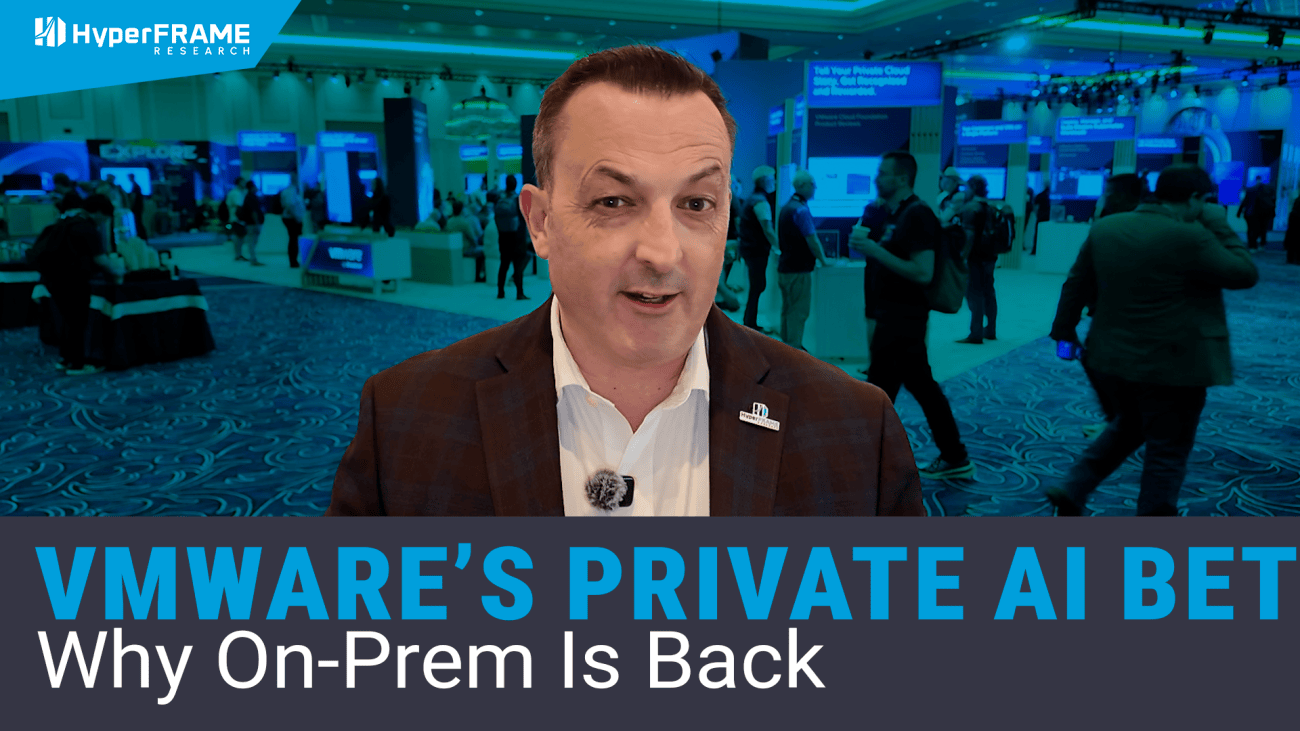
VMware Explore 2026: Why Private Cloud and Private AI Are Back in Focus
HyperFRAME Research Chief Technology Analyst Steven Dickens shares his takeaways from the show floor, examining VMware’s focus on VMware Cloud Foundation, private cloud infrastructure, containerized workloads, and enterprise AI deployment. Steven discusses a major healthcare and university environment that evaluated alternatives, including Nutanix, before ultimately recommitting to VMware and expanding its deployment. He also explores VMware’s emerging private AI strategy, its “metal to models” positioning, and the possibility that a meaningful portion of enterprise AI workloads will ultimately run on-premises within private cloud environments. The video also highlights an area where VMware’s messaging could go further: sovereignty, particularly as European enterprises place greater emphasis on sovereign infrastructure and data requirements. Steven closes by looking at growing stability across VMware’s channel and go-to-market model after several years of disruption.

IBM z17 & LinuxONE 5: Why Enterprises Are Moving Beyond Cloud First
Live from the New York Stock Exchange, HyperFRAME Research’s Steven Dickens speaks with José Castaño, Vice President of IBM Z Hardware Sales, about the enterprise shift from cloud-only and cloud-first strategies toward a more rationalized, fit-for-purpose hybrid cloud model.
The conversation explores how organizations can match each workload to the right platform based on security, latency, regulatory, sovereignty and business requirements. They also examine the expanded IBM z17 and LinuxONE 5 portfolio, including new rack-mounted options, real-time AI inferencing, generative AI acceleration, quantum-safe security and AI-assisted application modernization.
As infrastructure decisions become increasingly workload-specific, IBM is positioning the enterprise core not as a legacy destination, but as an active foundation for transactional AI, hybrid cloud and mission-critical modernization.

IBM LinuxONE 5: Enterprise Linux Beyond Commodity Infrastructure
Live from the New York Stock Exchange, HyperFRAME Research’s Steven Dickens speaks with Rick Schoonmaker, Director of IBM Z and LinuxONE Hardware Platform Product Management, about how IBM LinuxONE 5 is expanding the market for enterprise Linux.
The conversation examines the new LinuxONE Rockhopper 5 and Express configurations, including rack-mounted deployment, a lower starting price and a clearer path for organizations adopting LinuxONE for the first time.
Schoonmaker also explains why financial institutions and highly regulated industries are evaluating the platform for digital asset tokenization, security, data sovereignty and workload consolidation. As enterprises reconsider the cost and complexity of commodity infrastructure and public cloud environments, LinuxONE offers a specialized foundation for performance-intensive and mission-critical Linux workloads.

IBM LinuxONE 5 Express: Rack-Mount Flexibility Meets Enterprise AI
Live from the New York Stock Exchange, HyperFRAME Research’s Steven Dickens speaks with Tina Tarquinio, Chief Product Officer for IBM Z and LinuxONE, and Amparo-Maria Folch, Principal Product Manager for IBM LinuxONE, about the expansion of the IBM LinuxONE 5 portfolio.
The conversation explores how new smaller and rack-mounted configurations give enterprises greater flexibility across traditional data centers, colocation environments and data-sovereignty deployments. Tarquinio and Folch also discuss how Telum II and the IBM Spyre Accelerator bring AI closer to mission-critical transactions, enabling use cases such as real-time fraud detection and intelligent business processing.
With LinuxONE Express, IBM is also creating a more accessible entry point for organizations seeking enterprise-grade resilience, availability, security and workload consolidation—without requiring an existing mainframe footprint.

How Computacenter Is Advancing AI-Driven Networking with Extreme Networks
At Extreme Connect 2026 in Orlando, Ron Westfall of HyperFRAME Research speaks with Martin Henson, Chief Technologist for Networking at Computacenter, about the evolving partnership between Computacenter and Extreme Networks. Martin explains how Extreme Networks has built a strong sense of community across customers, partners, and distributors while helping organizations prepare for the next phase of AI-powered networking.
The conversation explores data sovereignty, AI agents, changing customer operating models, professional services, Platform ONE, and the growing demand for greater choice across enterprise networking environments.
As AI continues to accelerate, Martin shares why partners must help customers rethink how networks are operated, managed, and transformed—and why the vendors that evolve alongside their partners will be best positioned to deliver measurable business value.

HPE Discover 2026: Token Economics, AI Operations, and the Future of Enterprise Infrastructure
Live from HPE Discover 2026, Steven Dickens and Ron Westfall recap Fidelma Russo’s Day 3 keynote and unpack what it means for enterprises moving from AI experimentation to production. The conversation explores how HPE is advancing its enterprise AI vision through Morpheus, OpsRamp, Compute Ops Management, Alletra storage, token economics, and agentic operations. Steven and Ron discuss why storage is moving up the stack into a data intelligence role, how infrastructure must become more intelligent and efficient, and why GPU optimization is becoming a critical requirement for organizations scaling AI workloads. As AI adoption shifts toward production, HPE is positioning its portfolio to help enterprises improve business outcomes, reduce operational complexity, and make compute, storage, and infrastructure work together more intelligently.

Lenovo’s Arthur Hu on FIFA AI, Edge Computing, and Enterprise Transformation
Lenovo’s FIFA technology partnership is more than a global brand moment — it is a live demonstration of enterprise-grade AI, edge computing, and real-time data infrastructure operating under extreme pressure. In this HyperFRAME Research conversation from Lenovo’s Miami activation ahead of Colombia vs. Portugal, Steven Dickens speaks with Arthur Hu, SVP, Global CIO and SSG Chief Delivery & Technology Officer at Lenovo, about how Lenovo is powering FIFA experiences across stadiums, broadcast systems, AI analytics, and fan engagement. The discussion explores AI-powered Ref Cam stabilization, FIFA AI Pro, knowledge assistant use cases, and how the same technologies behind live sports innovation can translate into enterprise adoption across manufacturing, retail, financial services, healthcare, and smart venues. If Lenovo’s AI and edge architecture can perform across FIFA’s high-pressure global tournament environment, the implications for enterprise buyers are clear: real-time AI infrastructure is moving from proof of concept to production-scale business outcomes.

HPE Discover 2026: AI, Juniper, GreenLake, and the Enterprise Networking Pivot
Live from HPE Discover 2026, Ron Westfall and Steven Dickens break down the biggest takeaways from Antonio Neri’s Day 1 keynote. The discussion explores how HPE is executing across networking, compute, storage, software, security, and AI — with Juniper integration emerging as a foundational move in HPE’s enterprise AI strategy. From self-driving networks and Mist AI to GreenLake, AMD Helios, Vultr, unified SASE, and the evolution of Alletra storage, this recap highlights how HPE is building a more integrated portfolio for organizations moving from AI experimentation to real enterprise-scale deployment. Watch the full conversation for HyperFRAME Research’s early analysis of HPE’s momentum, partner ecosystem, and the infrastructure strategy shaping the next phase of AI adoption.

HPE Discover 2026: Why HPE Is Punching Above Its Weight in Enterprise AI
At HPE Discover 2026, Steven Dickens of HyperFRAME Research joins Keith Townsend, CEO of The CTO Advisor, for a candid post-keynote conversation on HPE’s evolving role in enterprise technology. The discussion covers why HPE is often underestimated as a legacy vendor, how GreenLake continues to shape consumption-based infrastructure, and why Juniper gives HPE a stronger position in AI networking. Steven and Keith also explore HPE’s aggressive approach to VMware/Broadcom customers, the role of Morpheus in private cloud modernization, and how Antonio Neri’s deep product knowledge is helping HPE execute across networking, compute, storage, AI, and hybrid cloud. From AI networking and GreenLake to quantum-adjacent infrastructure and enterprise architecture, this conversation captures why HPE Discover remains one of the most important events for infrastructure leaders, CIOs, and enterprise architects.

Cisco’s Industrial Networking Strategy for the AI Era
At Cisco Live, industrial networking is becoming a critical part of the enterprise AI conversation. In this HyperFRAME Research interview, Steven Dickens speaks with Samuel Pasquier from Cisco about how industrial environments are evolving as AI, security, cloud management, and connected infrastructure become more tightly linked. The discussion explores how Cisco is bringing industrial networking into Cisco Cloud Control, helping customers manage ruggedized industrial switches from the cloud, and using AI-driven operations to simplify how teams manage complex OT environments. Samuel also explains why security remains top of mind for industrial customers, especially as more AI use cases move into manufacturing, machine vision, plant floors, utilities, and the industrial edge. A major focus is Cisco Cyber Vision and the ability to recommend and simulate segmentation policies, helping organizations reduce risk in critical environments without adding unnecessary complexity. The conversation also connects industrial networking to the broader AI infrastructure buildout, including the power, cooling, facilities, and utility networks required to support the next wave of AI data centers. Watch the full conversation for a closer look at how Cisco is positioning industrial networking as a foundation for secure, scalable, AI-ready infrastructure.

Cisco Silicon One and the Full-Stack Future of AI Networking
At Cisco Live, the AI infrastructure conversation is moving deeper into the network. In this HyperFRAME Research interview, Steven Dickens speaks with Nick Kucharewski, Senior Vice President and General Manager of Cisco Silicon, about the role of Cisco Silicon One in building the next generation of high-performance, AI-ready networking platforms. The discussion explores how Cisco’s silicon strategy has evolved from individual ASICs built for specific systems into a broader product family with a common architecture across multiple market segments. Kucharewski explains why this platform approach matters as AI accelerates the pace of networking innovation and requires visibility, adaptability, security, and performance across the full stack. The conversation also looks at the impact of AI on hyperscale data centers, where the network is essential for connecting large clusters of accelerators into high-performance AI compute environments. As inference becomes more distributed across cloud, campus, branch, manufacturing, retail, and healthcare environments, networking becomes even more critical to delivering reliable AI outcomes wherever compute happens. The interview also highlights Cisco Cloud Control and the Catalyst 9550 as examples of how Cisco is bringing silicon, hardware, software, security, visibility, and cloud-based management into a more unified platform story.

Why AI-Driven Networking Needs an Economic Reality Check
At Extreme Connect 2026 in Orlando, Ron Westfall of HyperFRAME Research speaks with guest industry analyst Ray Mota of ACG Research about the economic realities shaping enterprise networking. The conversation explores why networking decisions can no longer be evaluated only through performance, latency, and reliability. As AI, automation, and platform-based operations become more central to IT strategy, organizations need clearer visibility into the hidden costs, business outcomes, and economic value behind their architecture decisions. Ron and Ray also discuss Extreme Platform ONE, Agent ONE, Extreme Fabric, human-in-the-loop AI, deterministic workflows, multi-vendor visibility, and why AI-driven networking must be tied to practical guardrails and measurable operational value. Watch the full conversation to learn how enterprise networking is evolving beyond point solutions toward more intelligent, transparent, and economically accountable operations.

Cisco’s AI Infrastructure Strategy Takes Shape at Cisco Live
At Cisco Live, the conversation around enterprise infrastructure is shifting fast. In this HyperFRAME Research discussion, Steven Dickens and Ron Westfall break down how Cisco is connecting networking, observability, AI infrastructure, silicon, automation, and security into a more unified story for the agentic AI era. The discussion focuses on Cisco Cloud Control, AgenticOps, Splunk observability, reference architectures, Silicon One, and the broader challenge enterprises face as they move from AI experimentation to trusted AI operations at scale. As AI infrastructure demand accelerates, the key question becomes whether Cisco can become the trusted partner enterprises need for secure, reliable, and scalable AI infrastructure. Watch the full conversation for analyst perspective from Cisco Live on what stood out, why trust matters, and how Cisco is trying to bring a historically fragmented infrastructure portfolio into a more coherent AI-era platform strategy.

21CS CEO Eddie Ciliendo on Building the Next Generation of Mainframe Innovation
Steven Dickens speaks with Eddie Ciliendo, CEO of 21CS, at the company’s headquarters in Morehead City to discuss the future of mainframe innovation, the importance of in-office culture, and how 21CS is investing in the next generation of mainframe talent.
The conversation explores 21CS’s evolution from a trusted IBM OEM partner into a company building its own product portfolio, including new capabilities for VSEn, STRATUSn, JCL syntax checking, and AI-native mainframe solutions. Eddie also shares why face-to-face collaboration matters for knowledge transfer, how younger engineering teams are reshaping mainframe tooling, and what customers should expect as 21CS continues to expand its roadmap.
Watch the full conversation to learn how 21CS is helping modernize critical mainframe environments while preserving the workloads that businesses still depend on.

Why AI-Driven Networking Needs an Economic Reality Check
At Extreme Connect 2026 in Orlando, Ron Westfall of HyperFRAME Research speaks with guest industry analyst Ray Mota of ACG Research about the economic realities shaping enterprise networking.
The conversation explores why networking decisions can no longer be evaluated only through performance, latency, and reliability. As AI, automation, and platform-based operations become more central to IT strategy, organizations need clearer visibility into the hidden costs, business outcomes, and economic value behind their architecture decisions.
Ron and Ray also discuss Extreme Platform ONE, Agent ONE, Extreme Fabric, human-in-the-loop AI, deterministic workflows, multi-vendor visibility, and why AI-driven networking must be tied to practical guardrails and measurable operational value.
Watch the full conversation to learn how enterprise networking is evolving beyond point solutions toward more intelligent, transparent, and economically accountable operations.

HyperFRAME asks Michael Dell why Dell for AI?
At Dell Technologies World 2026, HyperFRAME Research CEO Steven Dickens posed a direct question to the keynote panel: with so many vendors now talking about AI factories, what truly differentiates Dell? In this exclusive closed-door session, the discussion moves beyond keynote messaging and into the real enterprise AI challenge: how to turn AI infrastructure from concept into deployment. Michael Dell and the Dell leadership panel point to the company’s engineering velocity, end-to-end infrastructure portfolio, global services organization, financing capabilities, supply chain strength, and deep customer relationships as the foundation of its AI Factory strategy. The conversation highlights why AI infrastructure is no longer just about compute. It is about workloads, data strategy, networking, storage, services, deployment speed, and the ability to guide customers from early AI exploration to production-ready AI factory architectures.

Dell Tech World 2026: AI Factories, Edge AI, and the Next Wave of Enterprise Inference
Steven Dickens shares his key takeaways from Dell Technologies World, including Dell’s positioning around AI factories, enterprise inference, edge AI, and the role of supply chain scale in the AI infrastructure race. From conversations with Michael Dell, Dell leadership, and AI teams on the ground, the discussion highlights why AI workloads may not all move to the public cloud, how enterprises are evaluating token economics, and why real-time use cases such as healthcare and radiography could accelerate edge AI deployment. The video also explores Dell’s internal “customer zero” AI story, the productivity gains AI may unlock across large organizations, and the growing importance of infrastructure designed for inference at scale.

Dell’s Big AI Play: Keynote Reaction From Dell Tech World
Steven Dickens reacts from Dell Tech World following Michael Dell’s keynote, where AI infrastructure took center stage. The keynote featured a packed set of announcements, including new rack-scale infrastructure, AI desktops, and a broader focus on how enterprises can move from AI experimentation into real-world adoption.
A major theme from the keynote was the shift toward useful AI, AI factories, sovereign AI, and data residency. Steven breaks down why Dell’s message is not just about hyperscalers, but about bringing AI infrastructure at scale into on-premises and sovereign data centers.
The keynote also featured an on-stage appearance from Jensen Huang, reinforcing the growing importance of enterprise infrastructure in the next phase of AI deployment.
Watch for Steven’s reaction to Dell’s AI strategy, the role of on-prem infrastructure, and what this means for organizations looking to deploy secure, scalable AI.

Dell’s AI Data Platform Tackles the Enterprise AI Execution Gap
In this standing floor interview from Dell Technologies World, Steven Dickens speaks with Prasanna Vijayakumar, Product Marketing, AI Solutions at Dell Technologies, about the Dell AI Data Platform and why enterprise AI success depends on getting data ready before moving from proof of concept to production. The conversation explores the “AI execution gap,” why models and GPUs alone are not enough, and how Dell is approaching data management, orchestration, storage, analytics, vector databases, and data preparation as part of an integrated AI stack. Vijayakumar also discusses customer conversations around multimodal data, structured and unstructured data tagging, Starburst integration, Elasticsearch, and the importance of making enterprise data AI-ready before expecting AI systems to deliver real results.

Biggest Announcements from SUSECON Prague | AI Factories, SAP & Kubernetes
Live from SUSE CON Prague, Steven Dickens breaks down the biggest announcements and strategic themes emerging from day one of the event.
From AI factories and Kubernetes migrations to SAP modernization and digital sovereignty, SUSE outlined a broad enterprise infrastructure strategy focused on AI readiness and operational flexibility.

Red Hat’s AI Strategy: Becoming the Operating Layer for Enterprise AI
At Red Hat Summit 2026, HyperFRAME Research breaks down how Red Hat is positioning itself as the orchestration and operating layer for enterprise AI infrastructure.
From OpenShift virtualization and Kubernetes orchestration to automation with Ansible, the discussion explores how enterprises are balancing AI innovation with control, portability, and operational independence across hybrid and multi-cloud environments.

Why Enterprise Linux Skills and Certifications Matter More Than Ever | SUSECON Prague
Live from SUSE CON Prague, Steven Dickens speaks with Kristina Ebertus about the growing importance of enterprise IT training, certifications, and technical skills development.
As organizations accelerate adoption of Kubernetes, virtualization, and cloud-native technologies, the demand for qualified engineers and architects continues to rise.

Why Enterprise Customers Need More Than Just Software | SUSE Global Services Interview
Live from SUSE CON Prague, Steven Dickens speaks with Martina from SUSE Global Services about enterprise consulting, migration support, and customer success.
The discussion explores how SUSE helps organizations navigate platform migrations, virtualization changes, and cloud-native modernization projects.

How SUSE and SAP Built a 25-Year Enterprise Linux Partnership | SUSECON Prague
Live from SUSE CON Prague, Steven Dickens speaks with Andreas Jaeger about the long-standing collaboration between SUSE and SAP.
The discussion explores SAP HANA optimization, virtualization, containers, and the engineering collaboration required to support mission-critical enterprise workloads.

How Rancher Simplifies Kubernetes Management Across Any Platform | SUSECON Prague
Live from SUSE CON Prague, Steven Dickens speaks with Ivan Tarin about how Rancher is helping enterprises simplify Kubernetes and infrastructure management.
The conversation explores Rancher’s role as a unified control plane for Kubernetes clusters, virtual machines, and hybrid infrastructure environments.

How SUSE Is Preparing Linux Infrastructure for the AI Era | Sebastian Martinez Interview
Live from SUSE CON Prague, Steven Dickens speaks with Sebastian Martinez T. about how SUSE Linux Enterprise Server is evolving for the next era of AI-driven infrastructure.
The conversation explores AI-assisted operations, MCP servers, immutable Linux, and how enterprise Linux environments are being redesigned to support intelligent automation and modern AI workloads.

Why Open Source Flexibility Matters More Than Ever | openSUSE & SUSECON Interview
Live from SUSE CON Prague, Steven Dickens speaks with Luboš Kocman and Douglas DeMaio about open source flexibility, digital sovereignty, and enterprise Linux choice.
The discussion explores how openSUSE serves as both a community-driven innovation platform and a strategic on-ramp into enterprise Linux environments.

Amazon Quick Explained — The AI Agent That Works Across Your Entire Workflow
Amazon just introduced Quick — and it may be one of the most important steps toward true enterprise AI agents.
In this HyperFRAME Podcast interview, Steven Dickens sits down with Jose Kunnackal to break down what makes
Quick different:
• From questions to outcomes — not just answers
• Built-in enterprise security and governance
• Deep integration with tools like Excel and enterprise workflows
• Multi-model orchestration powered by AWS Bedrock This isn’t another chatbot. This is AI designed to work inside your business — securely, contextually, and proactively.
Watch the full conversation to understand how AWS is redefining the role of AI in the enterprise.
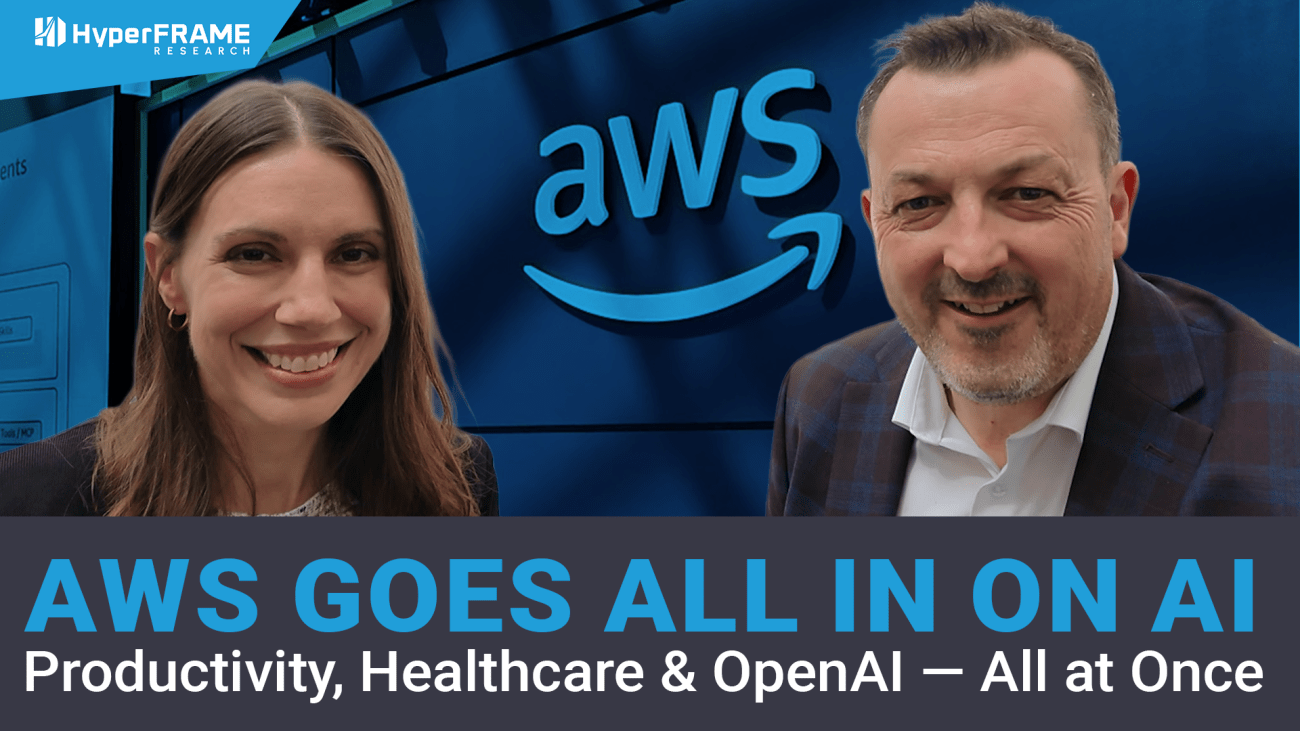
AWS Just Redefined Enterprise AI — Quick, Connect & OpenAI Integration Explained
AWS has made a bold move into enterprise AI — and this time, it's not just about infrastructure. In this live analysis from San Francisco, Steven Dickens and Stephanie Walter recap the event and break down three major announcements shaping the future of AI in the enterprise:
• Quick — AWS’s take on enterprise-ready AI productivity
• Connect — expanding into healthcare, hiring, and supply chain intelligence
• OpenAI + Bedrock — bringing model choice directly into the AWS ecosystem But beyond the hype, key questions remain:
Can AWS deliver enterprise-grade security?
Will pricing limit adoption?
And how seamless is the integration across platforms?
This is not just another AI launch — it’s a strategic shift in how enterprises will build, deploy, and scale intelligence.
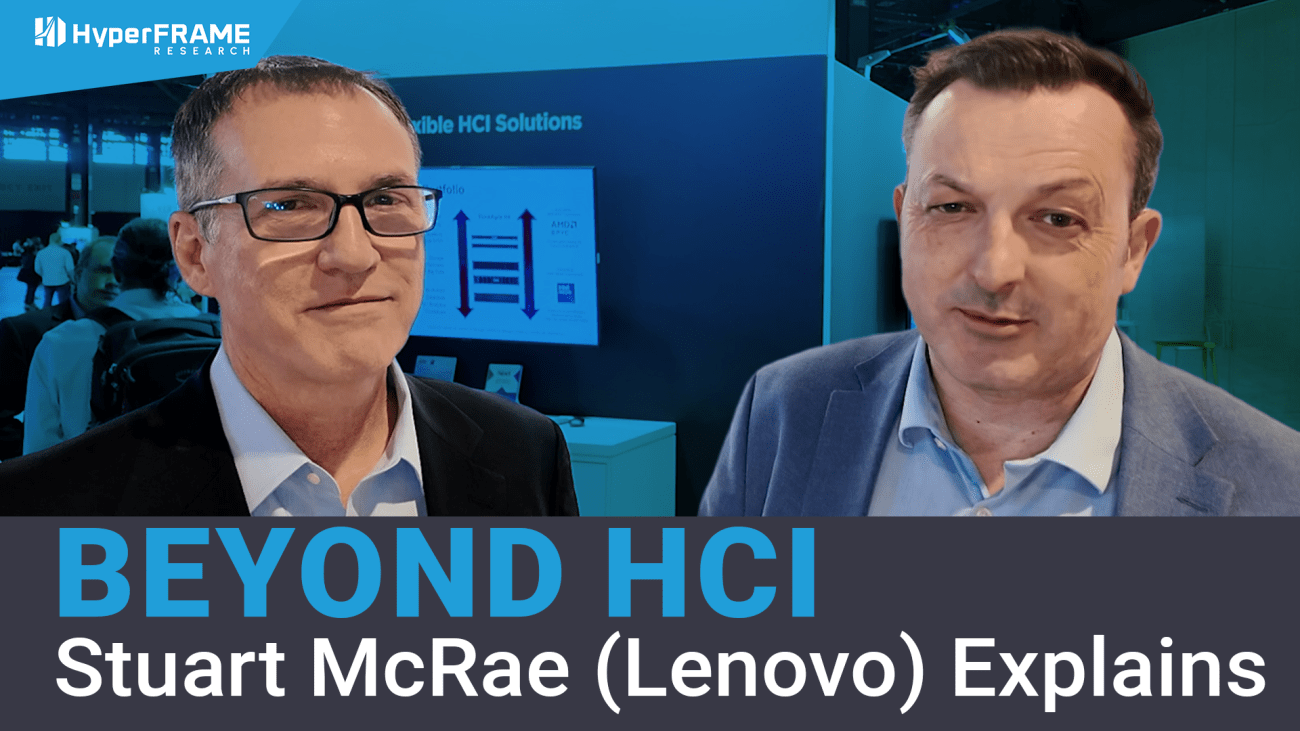
Lenovo and Nutanix Are Rethinking EnterpriseInfrastructure
Live from the show floor, Steven Dickens of HyperFRAME Research sits down with Stuart McRae, Executive Director of Lenovo’s Enterprise Storage, Software, and Solutions Offering Group, to explore how Lenovo and Nutanix are evolving their long-standing partnership. In this conversation, Stuart breaks down the shift from traditional hyperconverged models to more flexible, disaggregated infrastructure—giving enterprises greater choice across storage, compute, and deployment models. The discussion also dives into how organizations are navigating virtual machines, Kubernetes, and bare metal strategies, as well as how Lenovo is approaching the next wave of AI infrastructure through its Hybrid AI portfolio. From large-scale training clusters to enterprise inference deployments, this interview highlights why flexibility, scalability, and hybrid design are becoming critical for modern IT environments. If you're planning your next infrastructure move or exploring AI-ready platforms, this is a must-watch conversation.
Why Nutanix Is Betting on Bare Metal for AI Workloads
Live from the show floor, Steven Dickens of HyperFRAME Research sits down with Steve Carter, Product Management leader at Nutanix, to explore how the company is evolving its platform for the next wave of enterprise workloads. In this conversation, Steve breaks down how Nutanix is bridging the gap between virtual machines, containers, and bare metal—especially as AI workloads push infrastructure to its limits. From maximizing GPU performance to simplifying lifecycle management, the discussion highlights why bare metal is making a comeback in modern enterprise environments. The interview also dives into hybrid cloud strategy, Kubernetes adoption, and how Nutanix is delivering true workload flexibility across on-prem and cloud environments. If you're building or scaling AI infrastructure, this is a must-watch perspective on where the platform layer is heading.
Oracle’s AI Strategy: Bringing AI to the Data
At Oracle Analyst Day in Redwood City, Ron Westfall and the HyperFRAME team break down Oracle’s evolving strategy for AI infrastructure—and why it centers on one critical idea: bringing AI directly to the data.
Instead of moving massive datasets across systems, Oracle is embedding AI capabilities directly into its converged and autonomous database platform. This approach reduces security risks, improves performance, and simplifies enterprise architecture.
Enterprise AI Is Scaling Fast — Inside the SUSE + NVIDIA Stack
Enterprise AI is entering a new phase — and it's all about inference at scale.
Live from KubeCon Europe, Kevin Cochrane, Chief Marketing Officer at Vultr, breaks down how the partnership between SUSE and NVIDIA is reshaping how enterprises deploy AI.
From open frameworks like NeMo and Dynamo to single-click deployment across CPU and GPU environments, this conversation highlights a major industry shift: simplifying AI deployment while maintaining security, governance, and scalability.
If you're building or evaluating AI infrastructure, this is the stack evolution you need to understand.
Kubernetes Is Becoming the Core of AI Infrastructure | Steven Dickens at KubeCon Europe
At KubeCon Europe in Amsterdam, Steven Dickens shares key insights from one of the most important gatherings in the open source and cloud native ecosystem. With over 13,500 attendees and a rapidly expanding global contributor base, Kubernetes continues to evolve beyond container orchestration into a mission-critical platform for AI workloads.
AI Is Reshaping Kubernetes Platforms
At KubeCon Amsterdam, SUSE shares how AI is fundamentally transforming platform engineering and Kubernetes infrastructure. In this conversation, David Stauffer, Senior Director, Product Management at SUSE, explains how Rancher is evolving into a cloud-native AI platform—enabling organizations to integrate generative AI workflows directly into their infrastructure stack. From connecting third-party systems to managing distributed AI environments, this shift is redefining how modern platforms are built and scaled. As AI workloads continue to grow, platform teams face increasing complexity. This discussion explores how organizations can leverage AI to manage infrastructure more efficiently while supporting next-generation applications across hybrid and sovereign environments.
Securing AI at Scale with JFrog and NVIDIA NeMo
AI innovation is moving fast — but security and trust are becoming the real bottlenecks. Live from KubeCon Europe, we sit down with Tal Zarfati from JFrog to break down how organizations can scale AI safely using secure software supply chains.
Splunk Is Reinventing Observability with OpenTelemetry
Observability has always had one major problem: instrumentation complexity. Live from KubeCon Europe, we sit down with Greg Leffler from Splunk to explore how the industry is finally solving it.
The AI Infrastructure Explosion: Why Scale Is Everything Now
AI is pushing infrastructure beyond human-scale limits—and everything is breaking.
In this HyperFRAME Research interview, Renen Hallak, CEO of VAST Data, explains why traditional architectures can’t keep up with exponential AI growth—and what needs to replace them.
From multi-exabyte clusters and global control planes to the rise of AI agents and data as the next bottleneck, this conversation dives into the real challenges enterprises face when moving AI into production.
If you're building or scaling AI systems, this is a must-watch.
Kubernetes Is Evolving Fast — Amazon EKS Leads the Shift
In this episode of the HyperFRAME Podcast, Jesse Butler — Principal Product Manager for Amazon Elastic Kubernetes Service — breaks down how the Kubernetes ecosystem is evolving from fragmented tooling into a cohesive, production-ready platform. From open source innovation like Karpenter and Cedar to the rise of platform engineering, this conversation highlights how Kubernetes is being reshaped for scale, automation, and developer accessibility.
How Cisco Is Scaling AI Infrastructure for the Enterprise Era
Artificial Intelligence is entering a new phase. Organizations are moving beyond proof-of-concept deployments and into the challenge of operationalizing AI at scale.
In this episode of the HyperFRAME Research Podcast, Steven Dickens sits down with Kevin Wollenweber, General Manager at Cisco, live from Mobile World Congress (MWC) to discuss how enterprises and service providers are preparing for the next wave of AI infrastructure.
AI Factories Are Moving to the Edge — HPE & Juniper Explain the Future of AI Networking
Artificial intelligence is rapidly reshaping global infrastructure — and the next wave of AI is no longer confined to centralized data centers. At Mobile World Congress 2026, HyperFRAME sits down with Julius Francis, Sr. Director of Product Marketing, Routing Infrastructure Solution, from HPE to explore how the evolution of AI factories, inference workloads, and edge infrastructure is redefining the networking landscape. As hyperscalers continue investing in massive AI compute clusters, a new challenge is emerging: connecting distributed AI infrastructure across data centers, edge environments, and telecom networks.
AI, Infrastructure & the $1.5 Trillion Network Build | Stephen Rose | HyperFRAME Podcast
the global race to build AI infrastructure is accelerating — and the numbers are staggering. At Mobile World Congress, HyperFRAME sits down with Stephen Rose, CEO of Render Networks, to explore how a $1.5 trillion infrastructure investment wave is reshaping telecom networks, energy grids, and data center deployments.
The Future of Physical AI | MIPS Strategy Explained | HyperFRAME Podcast at MWC 2026
In this episode of the HyperFRAME Podcast, Stephen Dickens speaks with James Prior from MIPS at Mobile World Congress (MWC 2026) about the rise of Physical AI and how semiconductor innovation is enabling AI to power the next generation of devices. From autonomous vehicles and factory automation to edge devices and embedded systems, AI is shifting toward low-latency, on-device intelligence. That shift demands a new generation of processors, platforms, and hardware/software co-design. James explains how MIPS processor IP, software tools, and silicon services are helping enable this transformation — and why the future of AI will depend on highly optimized, efficient compute platforms designed specifically for real-world workloads.
Lenovo’s AI Strategy at MWC: Modular Laptops, Motorola Devices & Inference Leadership
Live from the Lenovo booth at Mobile World Congress, we explore the company’s latest innovations across devices, infrastructure, and AI. Lenovo is showcasing a wide range of technologies — from Motorola’s latest foldable smartphones to experimental modular laptop concepts designed for mobile professionals. But beyond devices, Lenovo is also making a strategic push into Hybrid AI and inference computing, positioning itself as a key infrastructure provider for enterprise AI workloads.
Enterprise Networks for the AI Era | Markus Nispel & Ron Westfall | MWC 2026
Recorded live at Mobile World Congress 2026, this HyperFRAME Research conversation features Markus Nispel, CTO EMEA at Extreme Networks, discussing how enterprises are preparing their infrastructure for the next phase of AI. In this interview, Ron Westfall, VP and Practice Leader for Infrastructure and Networking at HyperFRAME Research, explores how organizations are moving beyond experimentation toward real-world AI deployments and what that means for enterprise networking, data strategy, and operational transformation. Markus explains how multi-agent AI systems, data governance, and AI-ready network architectures are reshaping enterprise IT strategies — and why companies must rethink how teams collaborate, manage data, and scale network capacity to support emerging AI workloads.
Zoho’s Quiet Power Play: Integrated SaaS for the SMB and Mid-Market
Live from Austin, Texas, Steven Dickens, CEO & Principal Analyst at HyperFRAME Research, spent 48 hours with the Zoho leadership team exploring one of the most underappreciated SaaS portfolios in the market. While often overlooked in conversations dominated by publicly traded Big Tech, Zoho has quietly built a vertically integrated software ecosystem serving over 1 million customers globally — with a strong focus on the SMB and mid-market segments.
Google’s Big AI Play at MWC: Gemini, RCS Business Messaging & Smart Glasses
At Mobile World Congress in Barcelona, we take a closer look at Google’s latest innovations across Android, AI, and cloud infrastructure. From RCS Business Messaging transforming text conversations into app-like experiences, to Gemini-powered smart glasses with real-time translation, Google is pushing deeper into AI-driven user experiences and telecom infrastructure. We also explore how Google Cloud is moving deeper into telecom networks, with agentic operations and AI-driven automation inside the core network — a major shift in how operators could manage infrastructure and customer engagement.
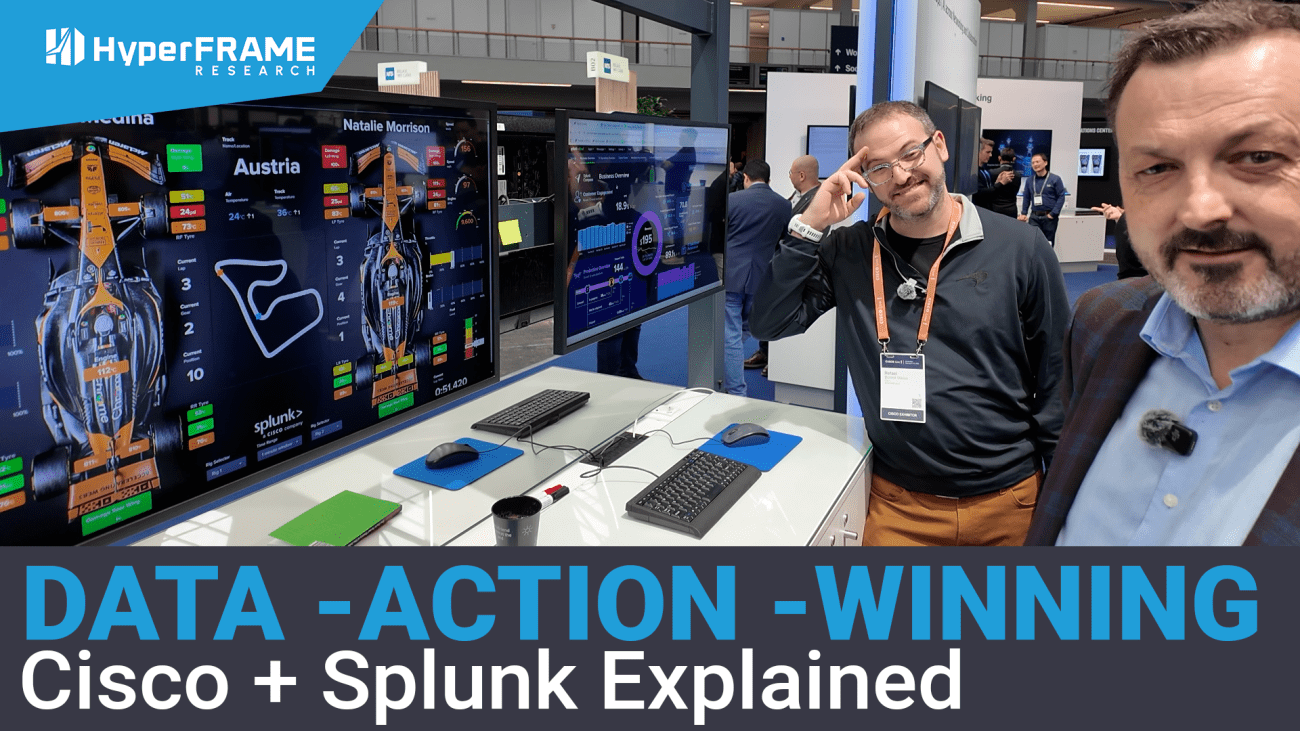
Cisco Data Fabric Powered by Splunk: Turning Data Into Action at Scale
At Cisco Live, we step inside the Splunk booth to explore Cisco Data Fabric — the unifying layer that turns enterprise data into actionable intelligence. From observability to security to AI-driven business insights, Cisco and Splunk are building a platform that connects telemetry, cloud, edge, and applications into one intelligent data bubble.
Deterministic AI in Action: How Dynatrace Delivers Answers, Not Guesses
At Dynatrace Perform in Las Vegas, Steven Dickens, CEO & Principal Analyst at HyperFRAME Research, sits down with Greg Finland, Head of Technical Marketing at Dynatrace, to explore one of the most important shifts happening in enterprise AI and observability: deterministic intelligence. In a market saturated with dashboards, alerts, and probabilistic insights, Dynatrace is redefining observability by delivering answers — not guesses. This episode breaks down how Dynatrace Intelligence fuses deterministic AI with agentic AI across a purpose-built unified data lakehouse, real-time topology graphs, and causal AI capabilities to drive faster root cause analysis and confident action.
Cisco Live EMEA 2026: From Silicon to Splunk — AI, Data Fabric & the Physics-to-Semantics Strategy
Cisco Live EMEA 2026 showcased a company evolving at speed. From Silicon One G300 to Splunk-powered Data Fabric, Cisco is building a vertically integrated AI stack that spans from physics to semantics.
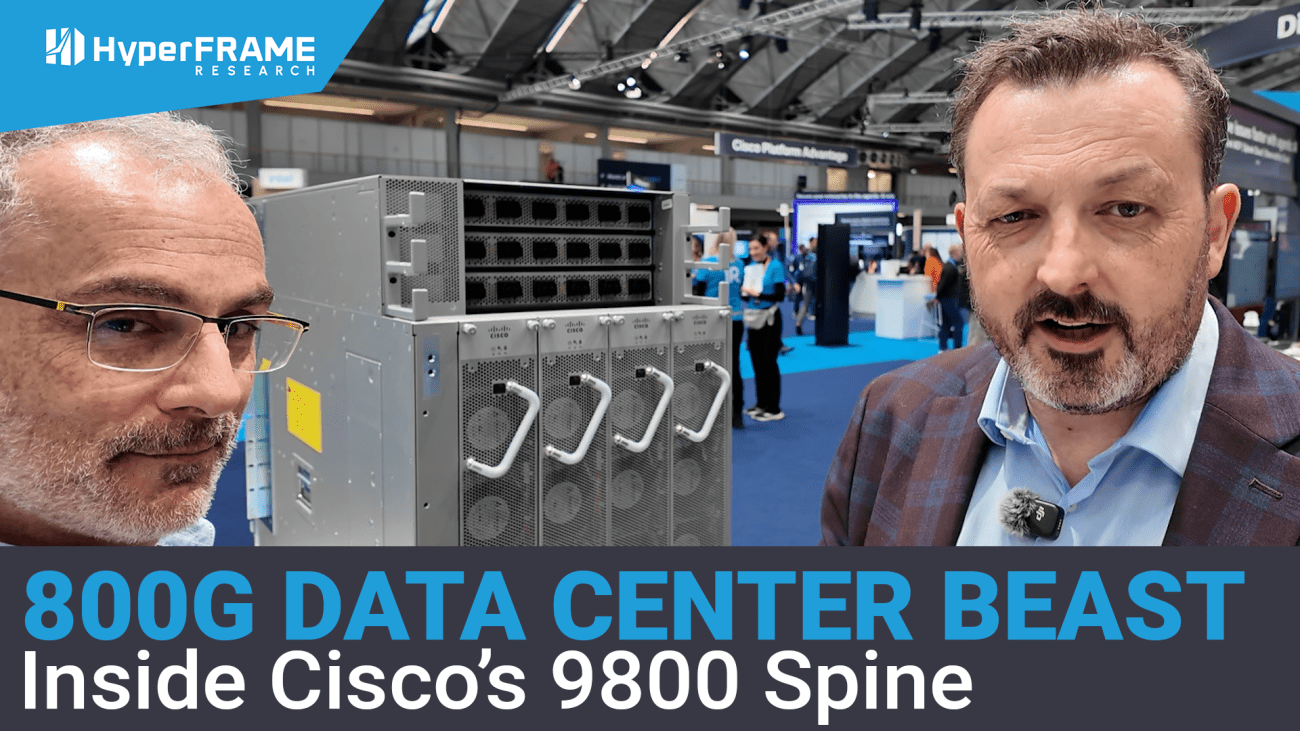
Cisco 9800 Modular Switch: High-Density 800G AI Spine Architecture Explained
Live from the Cisco show floor, we take a hands-on look at the Cisco 9800 modular switch — a high-density, high-throughput spine system designed for modern AI and enterprise data centers.

How Deterministic AI Is Redefining Observability and Accelerating Business Outcomes
At Dynatrace Perform in Las Vegas, we sat down with Dynatrace leadership to explore how deterministic AI is transforming modern observability.
Rather than simply layering chatbots on top of existing tools, Dynatrace is embedding AI deep into the observability stack — enabling faster root cause analysis, improved mean time to resolution, and a new era of business observability that connects IT performance directly to real business outcomes.
Key Takeaways from the ManageEngine Customer Panel in Atlanta
In this event recap, Steven Dickens shares key takeaways from a ManageEngine customer panel held in Atlanta, where technology leaders discussed how their organizations manage day-to-day IT operations. The discussion included perspectives from different sectors, highlighting how teams are addressing operational complexity, security concerns, and the need to scale infrastructure quickly to meet changing demands. One example explored how live environments must rapidly expand operations within short timeframes, reinforcing the importance of resilience and operational visibility.

Lenovo at NRF: Powering Smart Retail with AI, Edge, and Integrated Solutions
At the National Retail Federation (NRF) show, Lenovo highlighted how its smart infrastructure, edge AI, and integrated services are helping retailers move from AI concepts to real-world execution. In this walkthrough, Steven Dickens explores how Lenovo is delivering inference-ready server solutions — including compact, edge-focused systems launched at CES — to support real-time retail use cases. Beyond infrastructure, Lenovo’s Services Solutions Group (SSG) is bringing together hardware, software, and partner ecosystems to deliver complete, end-to-end retail solutions. From AI software stacks to NVIDIA-powered reference architectures, Lenovo is helping retailers deploy pre-integrated solutions that work both in-store and online — not just boxes of hardware.
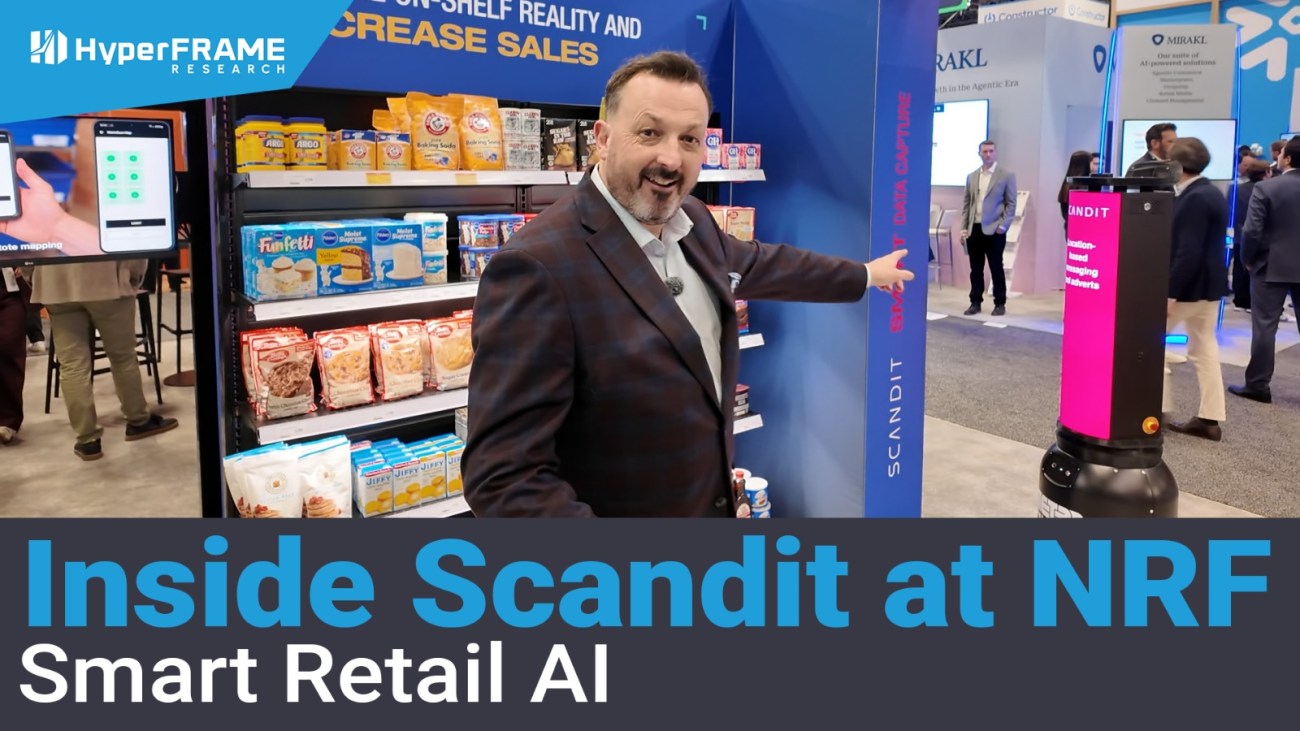
Scandit at NRF: How AI and Smart Data Capture Are Transforming Retail Operations
At the National Retail Federation (NRF) show, Scandit demonstrated how AI-powered smart data capture is transforming retail operations, from shelf management to inventory visibility and customer experience. In this walkthrough, Steven Dickens explores how Scandit’s technology connects robots, smart shelf edges, and security systems to monitor product availability, planogram compliance, and pricing accuracy in real time. These AI-driven insights help retailers ensure products are in the right place, at the right price, and available when customers need them. With major customers like Walmart and global luxury brands, Scandit is empowering store associates with better visibility into stock levels, reducing friction in the shopping experience, and improving operational efficiency across retail environments.

AWS at NRF: How AI, Retail Tech, and Cloud Infrastructure Are Transforming the Store Experience
At NRF, AWS showcased how cloud infrastructure, AI, and retail technology are reshaping the modern shopping experience. In this walkthrough, Steven Dickens explores how Amazon Web Services is combining its core cloud capabilities — including S3, Agent Core, Bedrock, and QuickSight — with Amazon’s real-world retail expertise to deliver smarter supply chain insights, frictionless store experiences, and AI-driven retail innovation. From “Just Walk Out” technology to advanced supply chain resilience powered by intelligent agents, AWS is helping retailers modernize operations, improve customer experiences, and adapt faster to changing market demands.

HPE at NRF 2026 – Retail Infrastructure in Focus
At NRF 2026, HPE showcased how modern retail infrastructure is evolving to support secure, AI‑enabled, and scalable operations. From edge computing to advanced security frameworks, HPE is helping retailers modernize their IT environments to improve efficiency, resilience, and customer experience. Watch the full breakdown and discover how enterprise‑grade infrastructure is shaping the future of retail. #HPE #NRF2026 #RetailTechnology #EnterpriseIT #Cybersecurity #AIinRetail #DigitalTransformation
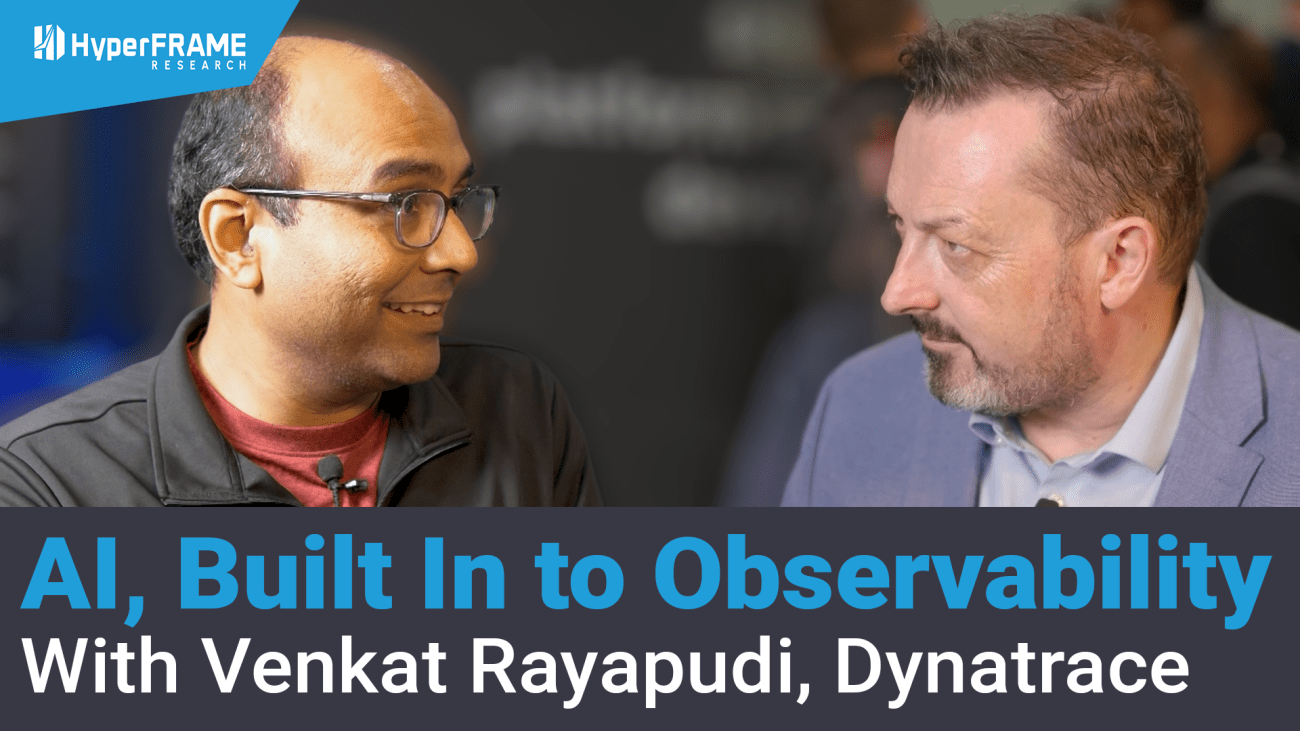
How Dynatrace Is Embedding AI Into Observability and DevOps
At KubeCon in Atlanta, Steven Dickens, CEO and Principal Analyst at HyperFRAME Research, sits down with Venkat Rayapudi, Product Manager at Dynatrace, to explore how AI is being embedded directly into the observability platform—not as a standalone feature, but as a foundational capability. From AI-powered problem analysis to deep visibility across AI workloads, Dynatrace is integrating intelligence throughout the full technology stack. The conversation also highlights how AI is improving productivity for developers, SREs, and IT teams by bringing insights directly into the tools they already use.

How Dynatrace Is Redefining Log Management with AI and Contextual Observability
At KubeCon in Atlanta, Steven Dickens, CEO and Principal Analyst at HyperFRAME Research, sits down with Venkat Rayapudi, Product Manager at Dynatrace, to discuss how logs are becoming a core pillar of unified observability. Dynatrace is rethinking log management by embedding AI-driven intelligence, deep contextualization, and schema-less data handling directly into its platform. The goal: make logs easier to consume, faster to analyze, and more actionable for modern IT, DevOps, and SRE teams. From Kubernetes environments to traditional workloads, Dynatrace is helping organizations simplify log ingestion, improve insight generation, and reduce operational complexity.

Motorola’s Ultra-Premium Smartphone Push: Design, Camera, and Experience
At a high-profile Motorola activation in Las Vegas, Steven Dickens, CEO and Principal Analyst at HyperFRAME Research, speaks with Nicole Hagen, Head of Global Product Marketing at Motorola Mobility, about the company’s new ultra-premium smartphone strategy. Motorola is introducing its Signature device—the first in a new high-end product tier—focused on elevating design, materials, camera performance, and user experience. With premium finishes, an award-winning camera system, and immersive audio capabilities, Motorola is positioning itself strongly in the global premium smartphone market.
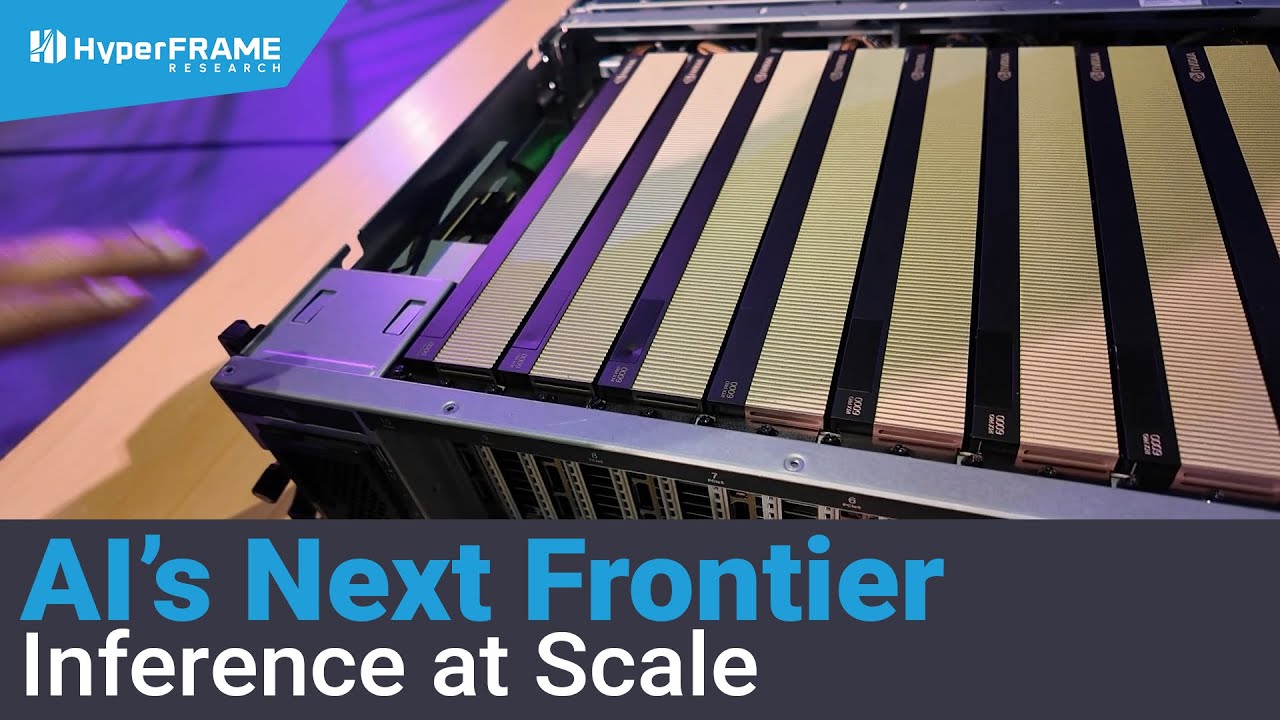
Why AI Inference Is the Next Big Phase of Enterprise AI
At Lenovo’s immersive Sphere activation during Tech World at CES, Steven Dickens, CEO and Principal Analyst at HyperFRAME Research, chat with Scott Tease, Vice President and General Manager of Lenovo’s Enterprise Portfolio at ISG, to discuss why AI inference is becoming the next major phase of enterprise AI adoption. As organizations move beyond large-scale model training, the focus is shifting toward real-world AI execution—where inference delivers tangible business value. Lenovo is responding with purpose-built infrastructure optimized for hybrid AI environments spanning cloud, data centers, and the edge. From AI factories for hyperscale customers to inference-optimized servers for SMBs, Lenovo is positioning itself to support the next wave of AI-driven transformation.

Samsung’s 2026 TV UI: AI-Powered Streaming and Smarter Discovery
At Samsung’s First Look 2026 event, Steven Dickens, CEO and Principal Analyst at HyperFRAME Research, gets an early look at Samsung’s new TV user interface designed to make content discovery faster, smarter, and more intuitive. The updated UI introduces a redesigned top navigation bar, personalized recommendations, AI-powered content discovery, and quicker access to live sports—all aimed at improving how users interact with their TVs. With AI-driven personalization and a more streamlined layout, Samsung is enhancing the smart TV experience for both existing and future customers.

Samsung’s Trifold Phone: Rethinking Mobile Screens and Multitasking
At Samsung’s CES 2026 Look Ahead event, Steven Dickens, CEO and Principal Analyst at HyperFRAME Research, takes a closer look at Samsung’s new trifold smartphone concept and what it means for the future of mobile devices. The trifold design pushes beyond traditional foldables, delivering a wider 16:9 viewing experience, enhanced multitasking, and significantly more screen real estate—all while remaining portable. With improved battery capacity, a dynamic AMOLED display, and next-generation mobile processing, Samsung is exploring how form factor innovation can redefine how users consume content and work on the go.

Samsung at CES 2026: AI, Smart Devices, and the Future of Screens
At Samsung’s CES 2026 activation, Steven Dickens, CEO and Principal Analyst at HyperFRAME Research, shares impressions from the show floor, exploring how Samsung is pushing innovation across displays, smart devices, and next-generation form factors. From massive Micro LED displays to AI-powered smart home appliances and evolving mobile experiences, Samsung is demonstrating how artificial intelligence is becoming deeply embedded across consumer and prosumer ecosystems. The company’s focus on new screen formats and operating systems highlights broader shifts in how users consume content and interact with technology.

Qualcomm at CES 2026: Powering the Next Wave of AI PCs and Devices
At CES 2026, Steven Dickens, CEO and Principal Analyst at HyperFRAME Research, explores how Qualcomm is expanding its Snapdragon ecosystem to power the next generation of AI-enabled devices. From AI PCs and gaming platforms to music, video, and productivity use cases, Qualcomm is showcasing how its Snapdragon X2 Elite platform is driving seamless app experiences, improved NPU efficiency, and on-device AI capabilities across multiple form factors. With growing adoption from leading device manufacturers, Qualcomm is positioning itself at the center of the AI PC movement—bringing AI workloads closer to users and enabling faster, more efficient experiences without relying solely on the cloud.

Lenovo at The Sphere: How AI Inference Is Becoming the Next Big Growth Engine
At Lenovo’s immersive Sphere activation during Tech World at CES, Steven Dickens, CEO and Principal Analyst at HyperFRAME Research, shares insights into how Lenovo is shaping the future of AI. From new AI platforms and innovative device form factors to a major push into inference-optimized infrastructure, Lenovo is signaling where the next phase of AI growth is headed. With AI training dominating the early years of large language model adoption, the spotlight is now shifting toward inference at scale. Lenovo is positioning itself at the center of this transition with a growing portfolio of inference-focused servers, new AI layers across its ecosystem, and innovative hardware experiences.

Lenovo’s Inference-Optimized Servers: Powering AI from Data Center to the Edge
Lenovo is redefining AI inference performance with a new generation of purpose-built servers designed to handle demanding workloads across data centers, enterprise environments, and the edge. From Intel- and AMD-based systems capable of hosting multiple high-power GPUs to rugged edge servers optimized for real-world deployment, Lenovo is delivering scalable, inference-ready infrastructure for modern AI use cases. In this video, we explore how Lenovo’s firmware, hardware configurations, and system design are optimized to maximize AI inference efficiency, performance, and reliability—whether in centralized data centers or closer to where data is generated.
AI Agents, Observability & The Future of Infrastructure
Join Steven Dickens on the show floor at Splunk + Cisco as he catches up with Andy ThurAI, Field CTO at Splunk, right after Andy jokingly tells him he “can’t record.” Once the laughter settles, they dive deep into the real story
Lenovo’s Inference-Optimized Servers: Powering AI from Data Center to the Edge
Lenovo is redefining AI inference performance with a new generation of purpose-built servers designed to handle demanding workloads across data centers, enterprise environments, and the edge. From Intel- and AMD-based systems capable of hosting multiple high-power GPUs to rugged edge servers optimized for real-world deployment, Lenovo is delivering scalable, inference-ready infrastructure for modern AI use cases. In this video, we explore how Lenovo’s firmware, hardware configurations, and system design are optimized to maximize AI inference efficiency, performance, and reliability—whether in centralized data centers or closer to where data is generated.

AWS Brings the Heat: Blowing Up Technical Debt and Targeting Legacy Workloads
Experience AWS re:Invent from the front lines. In this HyperFRAME field report, we break down AWS’s bold message as they literally blow up legacy workloads to promote their Transform service.
From mainframes and VMware to .NET applications, AWS is pushing hard to move technical debt into the cloud — backed by promises of ROI, TCO savings, and increased flexibility. But should every workload make the jump? Steven shares a pragmatic view on workload placement, non-functional requirements, and why not everything belongs in the public cloud.
Whether you're in modernization, cloud architecture, or enterprise transformation, this breakdown gives you the insight you need to navigate AWS’s latest push.
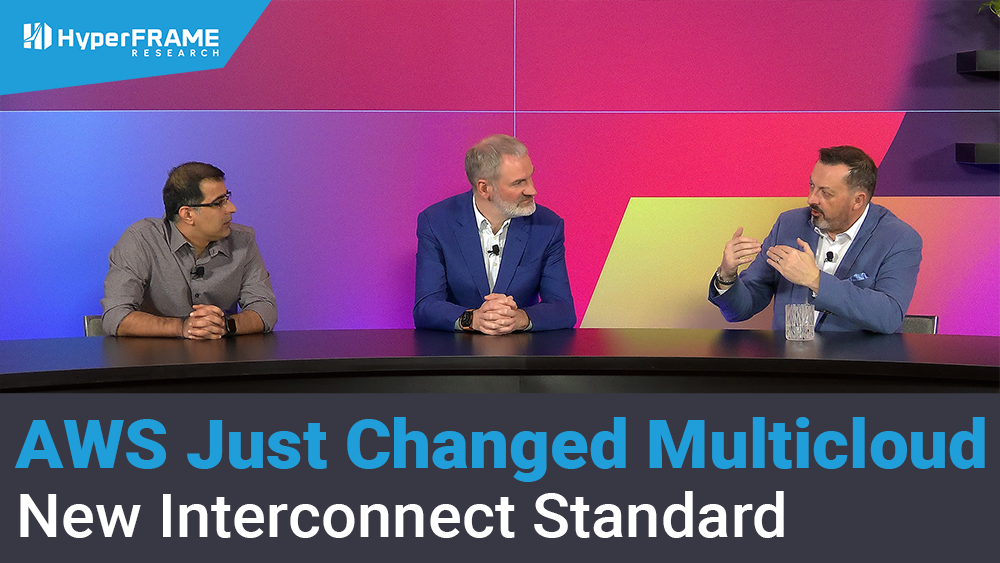
AWS Reinvents Multicloud Connectivity: A New Standard for Interconnects
In this HyperFRAME Podcast episode, host Steven Dickens sits down with Robert Kennedy, Vice President of Network Services at AWS, and Anoop Dawani, Director of Product Management at AWS, to break down one of the most transformative networking announcements in recent years.
AWS has introduced a fully managed Interconnect service that allows customers to establish high-speed, private, resilient connectivity between AWS and other major cloud providers—through a simple API call. No more physical circuits, cross-connects, manual BGP setup, or multi-team coordination taking weeks or months.
We explore how this model redefines multicloud networking, how fixed-bandwidth pricing improves cost predictability, how last-mile integration with telcos will evolve, and what the future of any-to-any cloud and on-prem connectivity looks like.
KubeCon Atlanta 2025: Key Trends, Startups & AI Conformance — Event Recap
Join Steven Dickens, CEO and Principal Analyst at HyperFRAME Research, as he breaks down the biggest insights from KubeCon + CloudNativeCon 2025 in Atlanta. After 21 meetings in just two and a half days, Steven unpacks the trends shaping the future of Kubernetes, open-source infrastructure, and AI-driven cloud innovation.

How Ingram Micro Is Using AI to Transform the Global Channel
In this episode of the HyperFRAME Podcast — produced in collaboration with Ingram Micro — Steven Dickens sits down with Paul Bay, CEO of Ingram Micro, to explore how AI is fundamentally reshaping the global channel ecosystem. Paul explains how Ingram Micro is leveraging three years of AI investment, more than 400 machine-learning models, and a mature data foundation to transform partner operations, reduce cost-to-serve, and unlock new revenue opportunities. From AI Assist and intelligent demand generation to Xvantage, their single-pane-of-glass platform, this conversation breaks down how distribution is evolving into a fully data-driven, insight-driven engine for the next generation of channel growth.

AWS on AI Workloads in Kubernetes: Cost, Scale & What’s Coming at re:Invent 2025
Join us at KubeCon 2025 in Atlanta as Steven Dickens speaks with Sabari Sawant, Product Marketing Manager for Kubernetes at AWS. In this conversation, Sabari breaks down how AI/ML workloads are evolving on Kubernetes, the biggest deployment challenges for GPU-heavy environments, and why EKS Auto Mode is becoming essential for production-scale AI.

AI Workloads on Kubernetes: AWS Reveals What’s Coming Next for EKS & ECR at KubeCon 2025
Dive into a special KubeCon 2025 conversation where Steven Dickens talks with Mike Stefaniak, Head of Product for Amazon EKS and ECR at AWS, to unpack the future of AI workloads on Kubernetes. Mike, breaks down how AWS is re-architecting container infrastructure for massive AI/ML deployments, agent-based systems, and enterprises scaling beyond 100,000 nodes.
AWS on AI Workloads in Kubernetes: Cost, Scale & What’s Coming at re:Invent 2025
Join us at KubeCon 2025 in Atlanta as Steven Dickens speaks with Sabari Sawant, Product Marketing Manager for Kubernetes at AWS. In this conversation, Sabari breaks down how AI/ML workloads are evolving on Kubernetes, the biggest deployment challenges for GPU-heavy environments, and why EKS Auto Mode is becoming essential for production-scale AI.
AI Workloads on Kubernetes: AWS Reveals What’s Coming Next for EKS & ECR at KubeCon 2025
Dive into a special KubeCon 2025 conversation where Steven Dickens talks with Mike Stefaniak, Head of Product for Amazon EKS and ECR at AWS, to unpack the future of AI workloads on Kubernetes. Mike, breaks down how AWS is re-architecting container infrastructure for massive AI/ML deployments, agent-based systems, and enterprises scaling beyond 100,000 nodes.
Inside Lenovo’s Pocket-to-Cloud Strategy: AI, Cooling, and Infrastructure Innovation
Join Steven Dickens from HyperFRAME Research as he reports from Lenovo’s Executive Briefing Center in Morrisville, North Carolina. After three days of in-depth sessions, Steven breaks down Lenovo’s “Pocket-to-Cloud” strategy — connecting everything from Motorola smartphones and PCs to enterprise servers and hyperscale infrastructure. He explores how Lenovo is positioning for the next era of AI infrastructure, on-premises intelligence, and data sovereignty, along with its innovative Neptune cooling technologies that tackle the growing power and efficiency demands of GPU-dense data centers.
AI in the Channel: Insights from Ingram Micro’s ONE Conference
In this episode, Steven Dickens, CEO and Principal Analyst at HyperFRAME Research, shares his insights from Ingram Micro’s ONE Conference in Maryland — a closer look at how the global distributor is transforming the partner ecosystem with artificial intelligence. From conversations with Paul Bay (CEO, Ingram Micro) and Sanjib Sahoo (President, Global Platform Group), Steven unpacks how the company’s Xvantage platform uses more than 4 petabytes of data collected over 46 years to drive intelligent recommendations, optimize supply chains, and deliver over $200 million in cost savings.
Oracle AI World 2025: Inside Oracle’s Agentic Strategy, 26AI Database & Cloud Innovations
Join Steven Dickens from HyperFRAME Research as he breaks down the biggest announcements from Oracle AI World 2025 — Oracle’s flagship event redefining enterprise AI, data platforms, and cloud infrastructure.
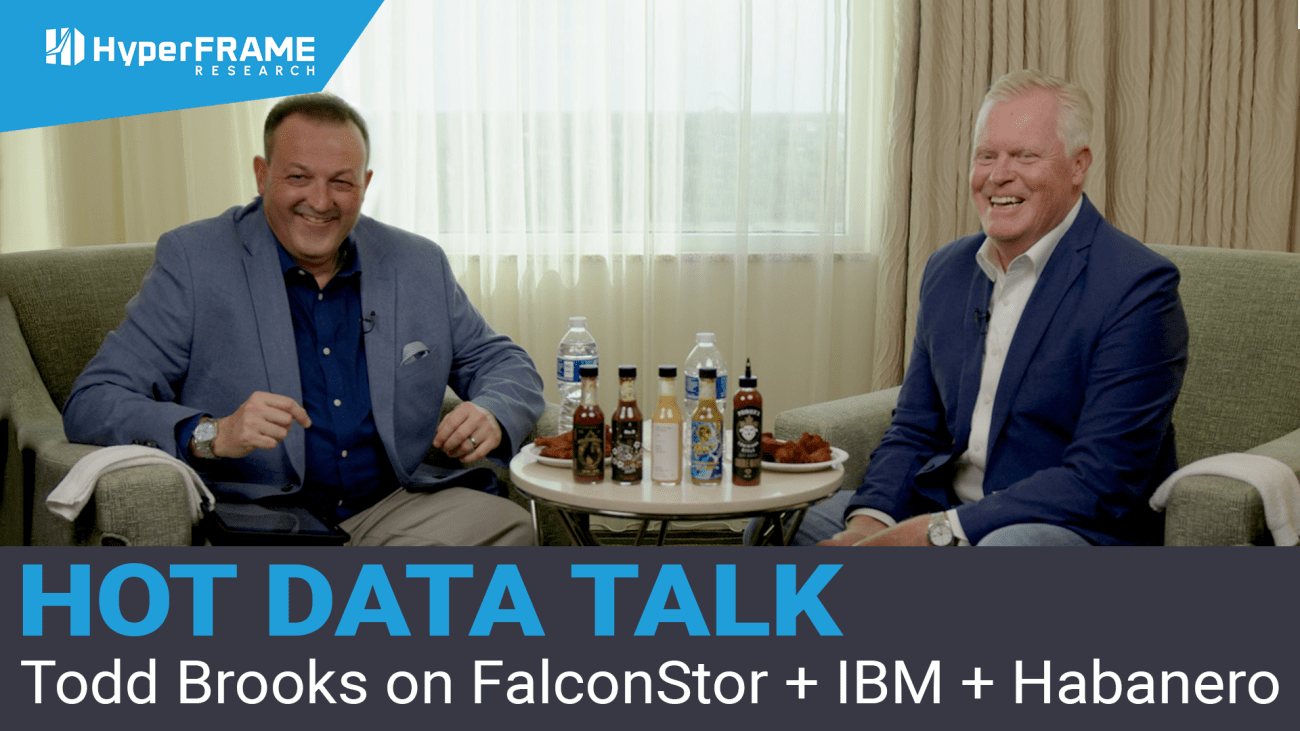
Hot Data Talk 🔥 FalconStor CEO Todd Brooks on IBM Power, Hybrid Cloud & Project Habanero
Get ready for a spicy tech conversation! 🌶 Join Steven Dickens, CEO & Principal Analyst at HyperFRAME Research, as he sits down with Todd Brooks, CEO of FalconStor, for a “Hot Ones”-style interview — five sauces, five questions, and one blazing discussion about the future of hybrid cloud data protection. From IBM Power integration to AI-driven resilience and the launch of Project Habanero, this episode brings the heat — both in flavor and innovation. Discover how FalconStor is redefining data immutability, sovereign cloud storage, and AI enablement for IBM partners through its new assistant, Thomas Watson.
Inside QumulusAI: Powering the Next Wave of AI Infrastructure | With Steve Gertz
In this episode of the HyperFRAME Podcast, host Steven Dickens, CEO and Principal Analyst at HyperFRAME Research, chats with Priya Doty, VP of Solutions Marketing for BMC AMI Solutions, and Matt Whitbourne, VP of Product Management & Design at BMC.

Mainframe DevOps in 2025: AI, COBOL-to-Java, and Modernization with BMC’s Anthony Anter
In this episode of the HyperFRAME Podcast, host Steven Dickens, CEO and Principal Analyst at HyperFRAME Research, chats with Anthony Anter, DevOps Architect & Evangelist at BMC, about how AI, automation, and modernization are transforming the mainframe in 2025.

IBM TechXchange 2025: Why IBM Is Back and Stronger Than Ever
Live from IBM TechXchange 2025, Steven Dickens, CEO and Principal Analyst at HyperFRAME Research, shares his key insights on IBM’s latest innovations across AI, infrastructure, and cloud. From the Z17 and Power11 announcements to the Spire DPU and AI integrations with Anthropic, Steven breaks down why IBM’s momentum feels different this year — and why “IBM is back.”
Small Models, Big Impact — Keith Townsend on Enterprise AI and Hybrid Cloud at IBM TechXchange 2025
Join Steven Dickens, CEO & Principal Analyst at HyperFRAME Research, in a candid conversation with Keith Townsend, Founder of The Advisor Bench, recorded during IBM TechXchange 2025.
Inside QumulusAI: Powering the Next Wave of AI Infrastructure | With Steve Gertz
Join Steven Dickens, CEO & Principal Analyst at HyperFRAME Research, in this exclusive interview with Steve Gertz, Chairman of the Board at QumulusAI — one of the most ambitious companies redefining AI infrastructure from the ground up.
Inside LogicMonitor’s AI-Driven Future | Key Insights from LMAC 2025 with Garth Fort & Paul Nashawaty
Join Steven Dickens, CEO & Principal Analyst at HyperFRAME Research, as he takes you behind the scenes of LogicMonitor’s Annual Analyst Conference (LMAC 2025) — a gathering that brought together industry leaders shaping the future of AI-powered observability.

QumulusAI CEO Mike Maniscalco on Powering the Future of AI Infrastructure
Join Steven Dickens, CEO & Principal Analyst at HyperFRAME Research, in this in-depth interview with Mike Maniscalco, the newly appointed CEO of QumulusAI.

ManageEngine at UserConf Las Vegas: Breadth, AI, and Culture in Focus
Join Steven Dickens, CIO & Principal Analyst at HyperFRAME Research, reporting from UserConf in Las Vegas after spending several days with ManageEngine, part of Zoho Corporation.
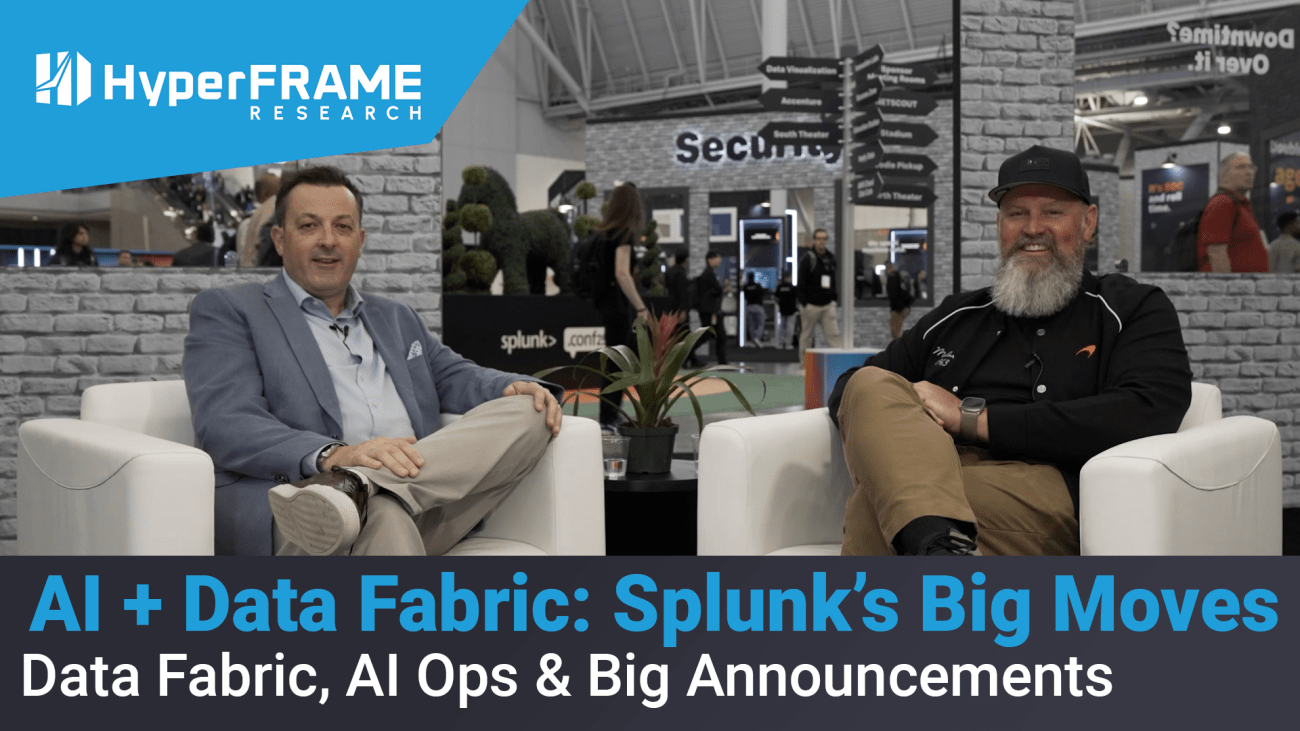
Splunk Field CTO Cory Minton on AI, Data Fabric & the Future of Observability
At Splunk .conf, we sit down with Cory Minton, Field CTO at Splunk, for an in-depth conversation on AI, data strategy, and Cisco’s Data Fabric. Cory shares what he’s hearing directly from customers, the real stages of their AI journey, and how Splunk is helping enterprises unlock value from their data.
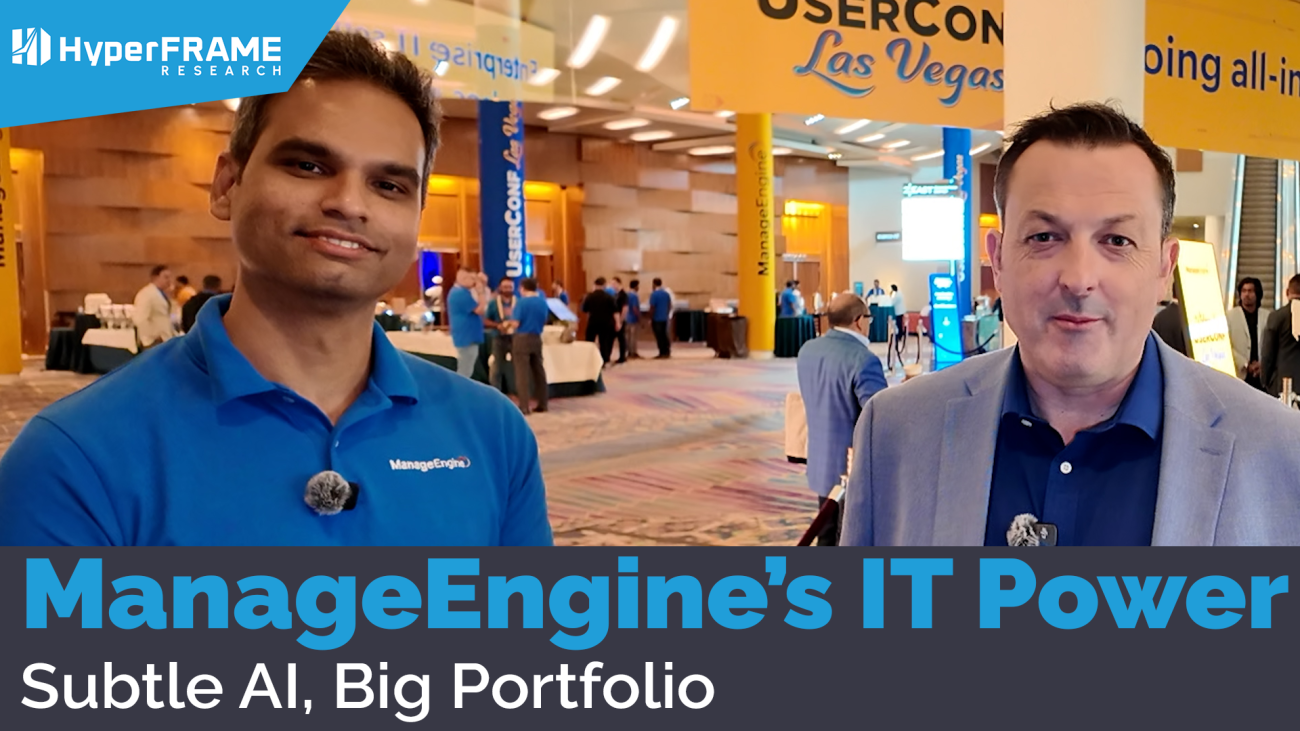
Exploring ManageEngine’s IT Solutions: Interview with Rakesh Jayaprakash at UserConf 2025
Join Steven Dickens, CIO & Principal Analyst at HyperFRAME Research, as he sits down with Rakesh Jayaprakash, Director of Product Management at ManageEngine, during UserConf 2025. In this exclusive interview, they discuss the breadth of ManageEngine’s IT management portfolio and how the company continues to deliver value for IT teams worldwide.
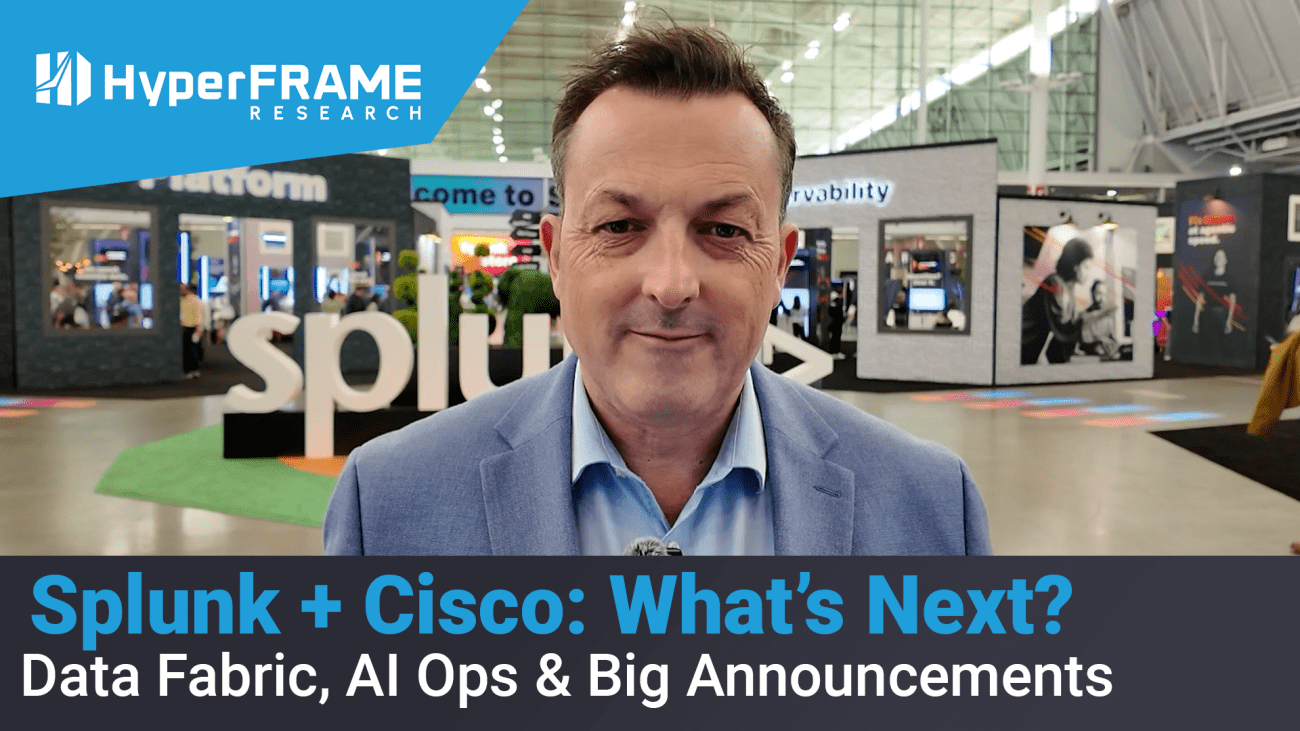
Splunk .conf24: Cisco Data Fabric, AI Ops & Observability Highlights
At Splunk’s annual conference, now under Cisco’s leadership, we dive into the biggest announcements and innovations shaping the future of observability, AI-driven operations, and federated data. From Cisco Data Fabric and ThousandEyes to the integration of AppDynamics into Splunk Observability Cloud, this video explores what’s next for enterprises leveraging Splunk.
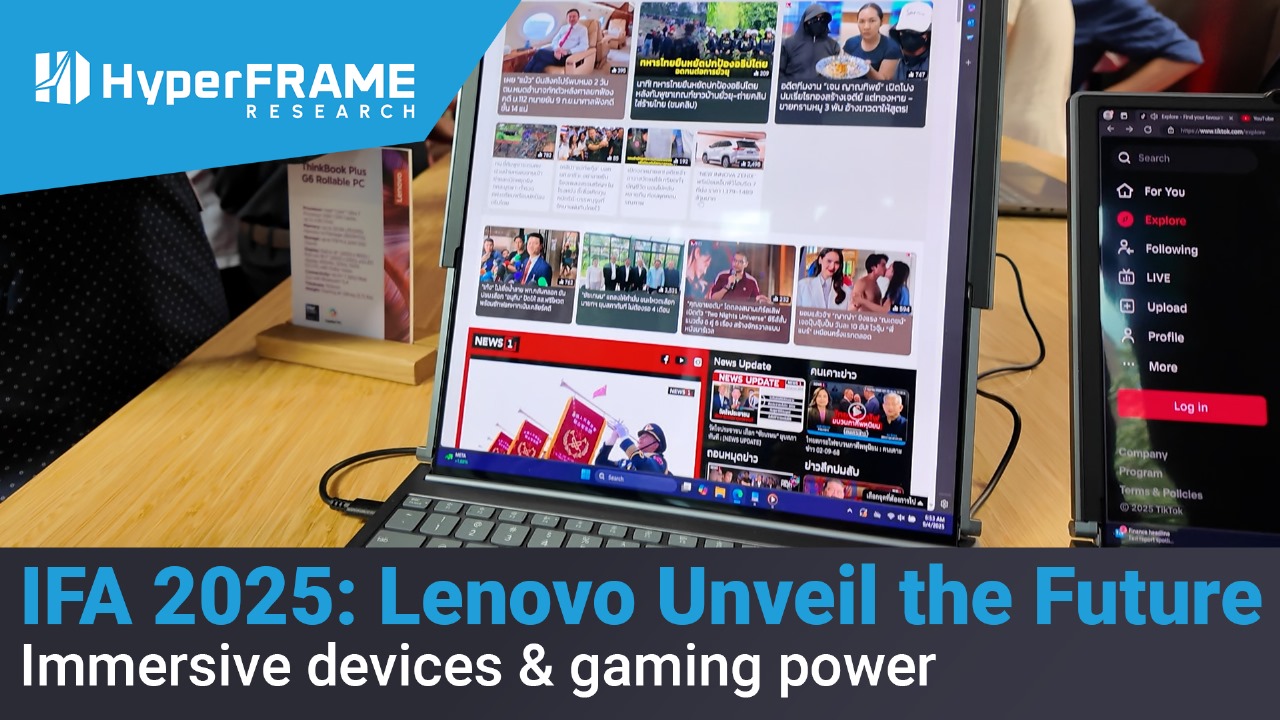
Lenovo IFA 2025: Immersive Devices and Cutting-Edge Innovation
Join Steven Dickens from HyperFRAME Research as he explores the highlights from Lenovo and Motorola at IFA 2025. From portrait-mode displays that expand real estate for developers and content creators, to immersive Legion devices built for gamers, and even luxury Motorola wearables with Swarovski crystals — this event showcased the future of enterprise and consumer technology.
Steven Long on AI, Innovation & the Future of Devices | Lenovo IDG
In this exclusive HyperFRAME Research interview from Lenovo’s IFA press conference in Berlin, Steven Dickens (CEO & Principal Analyst, HyperFRAME Research) speaks with Steven Long, Senior Vice President of Commercial Segment, Intelligent Devices Group at Lenovo.
Lenovo at IFA 2025: AI PCs, New Form Factors & Enterprise Innovation
At IFA 2025 in Berlin, Lenovo unveiled a wave of innovation across AI PCs, smartphones, and next-gen gaming devices. But the real story lies in the enterprise space: the company is exploring MCP and small language models running directly on devices, enabling new AI-driven workflows.
Pop-Up Mainframe at SHARE Cleveland: Speed, DevOps & Z17 Innovation
In this video from SHARE Cleveland, we dive into how Pop-Up Mainframe is transforming the DevOps lifecycle for enterprises. With the launch of IBM’s z16 and z17 systems, new IFL capabilities are opening doors to innovation — and Pop-Up is seizing the opportunity.
VMware Explore 2025: Broadcom’s Vision, VCF9 Adoption & Tanzu’s Future
In this video from VMware Explore 2025, we dive deep into how Broadcom is shaping VMware’s future. Key takeaways include the strong adoption momentum of VCF9, the evolving innovation strategy around Tanzu, and the company’s push toward becoming a data intelligence platform.
Agentic AI at Scale: How InterSystems Is Transforming Healthcare and Data Integration
Join us in Boston for an exclusive conversation with Mike Fuller, Head of Marketing for the UK and Ireland at InterSystems. Discover how InterSystems is scaling agentic AI across key industries like healthcare, supply chain, and finance through their Smart Data Fabric approach and tools like Data Fabric Studio and IntelliCare.

Smart Data Fabric & AI: How InterSystems Is Powering Enterprise Intelligence
In this exclusive interview, Tom Woodfin—Head of Development for Data Platforms at InterSystems—explains how their Smart Data Fabric architecture enables enterprises to unify data, break down silos, and accelerate AI adoption.

AWS Summit NYC 2025: Key Announcements on AI Strategy, Mainframe Modernization & Oracle Integration
We’re wrapping up an action-packed AWS Summit in New York City with some major takeaways that enterprise tech leaders need to watch closely. From AWS’s collaborative AI strategy—including their Nova foundation models and partnerships with Anthropic—to big moves around .NET, VMware, and mainframe workloads, this summit delivered serious substance.
AI Ethics, Infrastructure & Access — Steven Dickens Talks with Dr. Severence MacLaughlin, Ph.D.
AI Ethics, Infrastructure & Access — Steven Dickens Talks with Dr. Severence MacLaughlin, Ph.D. Can AI truly deliver equitable access—or will it deepen the digital divide? Steven Dickens, CEO and Principal Analyst of HyperFRAME Research, sits down in Times Square with Dr. Severence MacLaughlin, Ph.D., for a compelling conversation on the moral, technical, and regulatory frontiers of artificial intelligence.

Self-Diagnosis with AI? James Swannick on the Future of Healthcare Innovation
Is AI replacing your doctor? It might be sooner than you think. In this bold discussion from Times Square, HyperFRAME's Steven Dickens talks with health advocate and entrepreneur James Swannick about the rise of self-diagnosis powered by AI.

David Malley on Kiro by AWS: Why Devs Love Spec-Driven AI Development
Just days after launch, Kiro—the new IDE Agentic experience from AWS—is already turning heads in the dev community. In this courtside chat at the WNBA game, Steven Dickens sits down with David Malley, Head of Developer Experience at AWS, to talk early adoption, Discord buzz, and why spec-driven development is resonating with builders.
Steven Dickens & Tim Crawford Decode Amazon's Agent AI Roadmap at AWS Summit NYC
Join HyperFRAME Research CEO Steven Dickens as he sits down courtside with Tim Crawford, CIO Strategic Advisor at AVOA, following the AWS Summit in New York City.
Amazon’s Big AI Leap: Inside the New Generative IDE | Live from NYC
Reporting straight from New York City! In this exclusive video, we take you behind the scenes of Amazon's latest moves in the world of Generative AI and cloud innovation.