

















Research Finder
Find by Keyword
Upscale AI: Pure-Play Networking Unicorn Secures $200M Series A
Upscale AI secured a $200 million Series A round, bringing its total funding to over $300 million, bringing a strategic commitment to establish itself as a category-defining contender in pure-play AI networking infrastructure.
01/22/2026
Key Highlights
- Positioned as a pure-play entity, Upscale AI is rebuilding the networking stack from the ground up to solve the massive data bottlenecks that traditional, retrofitted architectures cannot handle.
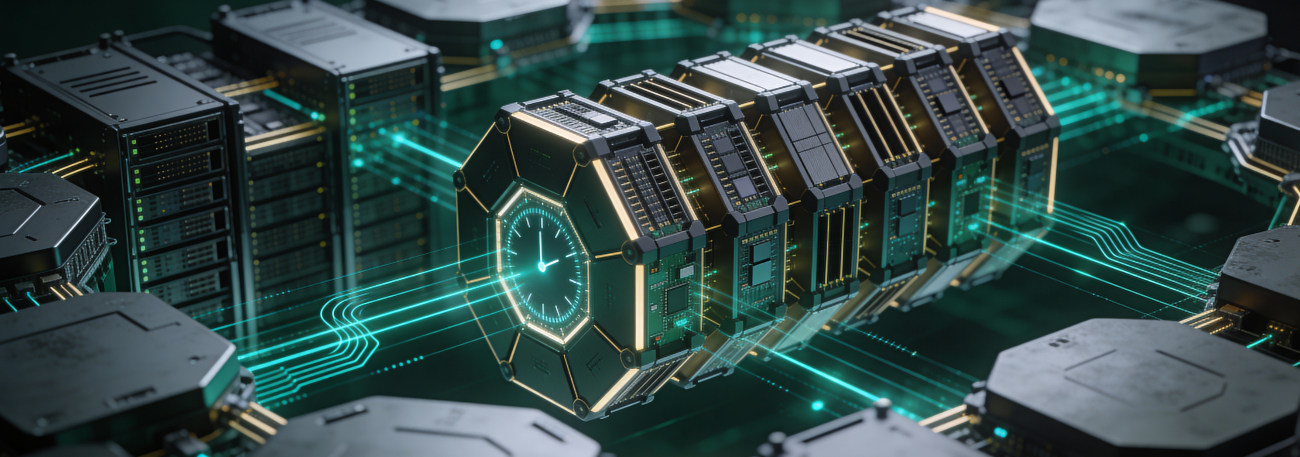
- The centerpiece of the company’s strategy is the SkyHammer scale-up solution, which utilizes synchronized clocking to eliminate packet stragglers and enable nanosecond-latency communication across a unified AI engine.
- Unlike proprietary rivals, Upscale AI is a primary driver of open-standard ecosystems like UALink and Ultra Ethernet, providing hyperscalers with a "bring-your-own-compute" alternative that eliminates vendor lock-in.
- By offering performance that rivals NVIDIA’s NVLink while supporting a heterogeneous mix of hardware (AMD, Intel, and custom ASICs), Upscale AI directly challenges the dominance of closed, single-vendor ecosystems.
- To succeed against established rivals such as Marvell (which acquired Celestial AI) and NVIDIA (which acquihired Enfabrica), Upscale AI is leaning into its turnkey platform approach to deliver full-stack, rack-scale connectivity by late 2026.
The News
Upscale AI, Inc., an AI networking infrastructure company, announced $200 million Series A financing led by Tiger Global, Premji Invest, and Xora Innovation with participation from Maverick Silicon, StepStone Group, Mayfield, Prosperity7 Ventures, Intel Capital, and Qualcomm Ventures. This new investment brings the total funding received to over $300 million. For more information, read the Upscale AI press release.
Analyst Take
Upscale AI seeks to establish itself as a category-defining contender in pure-play AI networking infrastructure, a position aided by the announcement of a $200 million Series A financing round. Led by high-profile investors including Tiger Global, Premji Invest, and Xora Innovation, and supported by strategic backers like Intel Capital and Qualcomm Ventures, this oversubscribed round brings the company's total funding to more than $300 million in just a few months. This influx of capital suggests a shift in market confidence toward specialized networking solutions designed specifically to handle the unique demands of artificial intelligence.
We see the intensity of this investor backing underscoring a growing industry consensus that traditional networking architectures have become a critical bottleneck for scaling AI. Unlike legacy systems designed to connect general-purpose compute and storage, AI networking requires a shift in how clusters are unified. While traditional networks simply connect disparate endpoints, modern AI networking must unify the entire cluster into a single, cohesive engine. As specialized AI compute continues to expand, it is increasingly hampered by retrofitted or proprietary architectures that were never intended for the massive, tightly synchronized scale-up performance required at the rack level in a post-AI world.
Upscale AI is focused on redefining the architecture of AI by unifying GPUs, accelerators, memory, storage, and networking into a single, synchronized engine. At the heart of this strategy is the purpose-built SkyHammer scale-up solution, which is designed to enable a unified rack architecture. By collapsing the physical and logical distance between critical components such as memory and accelerators, this technology targets transforming the entire hardware stack into one cohesive and synchronized system.
Moreover, the platform is rooted in transparency and interoperability, actively advancing open standards and open-source technologies such as ESUN, Ultra Accelerator Link (UAL), and Ultra Ethernet (UEC). The company’s commitment to an open ecosystem is evidenced by its role within the SONiC Foundation and the Open Compute Project.
Why Upscale AI: Scaling AGI Connectivity with $200M for Full-Stack Open Networking
With the injection of $200 million in new financing, we view Upscale AI as poised to deliver a turnkey, full-stack platform that spans silicon, systems, and software. This comprehensive offering is specifically engineered to interconnect the increasingly heterogeneous hardware landscape required for the future of Artificial General Intelligence (AGI).
Accordingly, the company intends to use this capital to expand its engineering, sales, and operations teams as it transitions into full-scale commercial deployment. Currently, Upscale AI is seeing market momentum, particularly among hyperscalers and infrastructure operators who are seeking open-standard alternatives to restrictive, proprietary networking models.
We observe that Upscale AI primarily competes against NVIDIA’s proprietary InfiniBand and NVLink architectures, which currently dominate high-performance AI clusters but lock customers into a single-vendor hardware ecosystem. It also challenges Broadcom’s custom silicon and specialized Ethernet solutions that, while widely used, often lack the deep, full-stack synchronization found in Upscale’s SkyHammer platform.
For instance, we see the primary battleground for AGI infrastructure is the interconnect. While NVIDIA’s NVLink is the current reference architecture for intra-rack communication, it is restricted to NVIDIA-only environments. Upscale AI’s SkyHammer is designed to provide similar performance while supporting a heterogeneous mix of hardware.
In proprietary networks, a single slow packet (i.e., a straggler) can cause an entire GPU cluster to wait. SkyHammer uses a synchronized clocking system across the silicon and the cable to ensure data arrives at the exact same nanosecond across all nodes, maximizing GPU utilization. Unlike traditional Ethernet that treats memory as a local resource, Upscale AI’s platform is built to enable multiple accelerators to share a massive pool of memory across the rack. This is essential for training the multi-trillion parameter models required for AGI.
By adhering to UALink, Upscale AI provides data center decision makers and operators the ability to mix and match hardware. This prevents a scenario where an enterprise is forced to buy a specific brand of GPU just because their networking cables won't talk to any other brand.
Looking Ahead
Overall, we believe Upscale AI is positioned for competitive success because it can paceset the delivery of a vertically integrated, open-standard alternative to the proprietary black box networking stacks that currently dominate the market. By leveraging its custom SkyHammer ASIC to support emerging industry standards such as UALink and Ultra Ethernet, the company offers hyperscalers the bring-your-own-compute flexibility they prioritize, enabling them to interconnect a heterogeneous mix of GPUs and accelerators without being locked into a single vendor's ecosystem.
This architectural agility, combined with deterministic, memory-semantic performance that rivals NVIDIA's NVLink, can help transform the network from a bottleneck into a unified engine, directly addressing the multi-trillion parameter scaling needs of the emerging AGI landscape.
From our perspective, the competitive landscape is swiftly evolving as Upscale AI faces direct competition from well-funded startups that are also re-engineering the AI interconnect: Enfabrica, Celestial AI, and Astera Labs. Enfabrica is a formidable challenger with its SuperNIC (ACF-S) silicon, which boasts massive throughput of up to 3.2 Tb/s and focuses on fault-tolerant networking that can reroute data instantly if a link fails, a critical feature for massive clusters. In September 2025, NVIDIA absorbed Enfabrica's leadership and innovation through a $900 million acquihire and technology licensing deal, bringing Enfabrica's CEO and key engineers in-house.
This strategic move can enable NVIDIA to integrate Enfabrica's SuperNIC and ACF-S (Accelerated Compute Fabric) technology into its Blackwell and future GPU architectures, specifically to solve the bottleneck of connecting 100,000+ GPUs into a single unified supercomputer. By licensing the IP rather than pursuing a full acquisition, NVIDIA successfully captured the startup's clean sheet networking breakthroughs while sidestepping the regulatory scrutiny that previously blocked its attempt to buy Arm. Moreover, NVIDIA hedges against the proprietary concerns related to its portfolio and as such can counter Upscale AI with more agility.
In addition, Celestial AI targets the memory wall using its Photonic Fabric technology, which uses light instead of electricity to move data between GPUs and memory at a fraction of the power consumption. In December 2025, Marvell announced its agreement to acquire Celestial AI for up to $5.5 billion, a strategic move designed to integrate what we view as Celestial’s disruptive Photonic Fabric technology into Marvell’s broader silicon portfolio. This acquisition allows Marvell to counter Upscale AI by offering an all-optical scale-up fabric that breaks the power wall of traditional copper interconnects, delivering an unprecedented 16 Tbps of bandwidth per chiplet.
By combining this photonic technology with its own UALink scale-up switches, Marvell can provide a vertically integrated full-stack platform that can scale AI clusters across multiple racks with lower latency and higher thermal stability than electrical-based startup solutions. As a result, Marvell leverages its existing hyperscaler relationships, reinforced by a strategic collaboration with Amazon, to offer a bankable and mature alternative to Upscale AI’s first-generation offerings.
Astera Labs looks to provide a comprehensive Intelligent Connectivity Platform featuring Scorpio Smart Fabric Switches, Aries PCIe/CXL retimers, and Leo memory controllers that act as the high-speed nervous system for AI racks. It can counter Upscale AI by offering a market-proven, vendor-agnostic ecosystem that is already shipping in millions of units and deeply integrated into the world's leading hyperscale data centers. While Upscale AI focuses on a specialized scale-up ASIC, Astera Labs leverages its dominant position as a key sponsor of the UALink consortium to provide a highly reliable, software-defined connectivity suite that standardizes performance across diverse GPUs, CPUs, and memory modules.
To compete successfully, Upscale AI must lean into its full-stack vertical integration and its aggressive timeline for UALink-compliant switching. While some competitors focus strictly on NICs or optical fabrics, Upscale’s turnkey platform. spanning silicon, systems, and software, can reduce the integration burden for hyperscalers who want to build heterogeneous racks quickly.
By delivering a breakthrough scale-up switch built on the open UALink standard by late 2026, Upscale can position itself as the primary orchestrator that enables chips from AMD, Intel, and custom ASIC makers to communicate with the same deterministic latency as an all-NVIDIA cluster. Success will ultimately hinge on its ability to prove that its synchronized SkyHammer architecture provides superior goodput (actual data processed) compared to rival alternatives.

Ron Westfall | VP and Practice Leader for Infrastructure and Networking
Ron Westfall is a prominent analyst figure in technology and business transformation. Recognized as a Top 20 Analyst by AR Insights and a Tech Target contributor, his insights are featured in major media such as CNBC, Schwab Network, and NMG Media.
His expertise covers transformative fields such as Hybrid Cloud, AI Networking, Security Infrastructure, Edge Cloud Computing, Wireline/Wireless Connectivity, and 5G-IoT. Ron bridges the gap between C-suite strategic goals and the practical needs of end users and partners, driving technology ROI for leading organizations.