

















Research Finder
Find by Keyword
Data Center Water Cooling: Debunking Misperceptions and Myths
As AI Datacenter Growth Explodes, The Doomer Narrative Has Gained Traction, HyperFRAME Research Puts The Record Straight
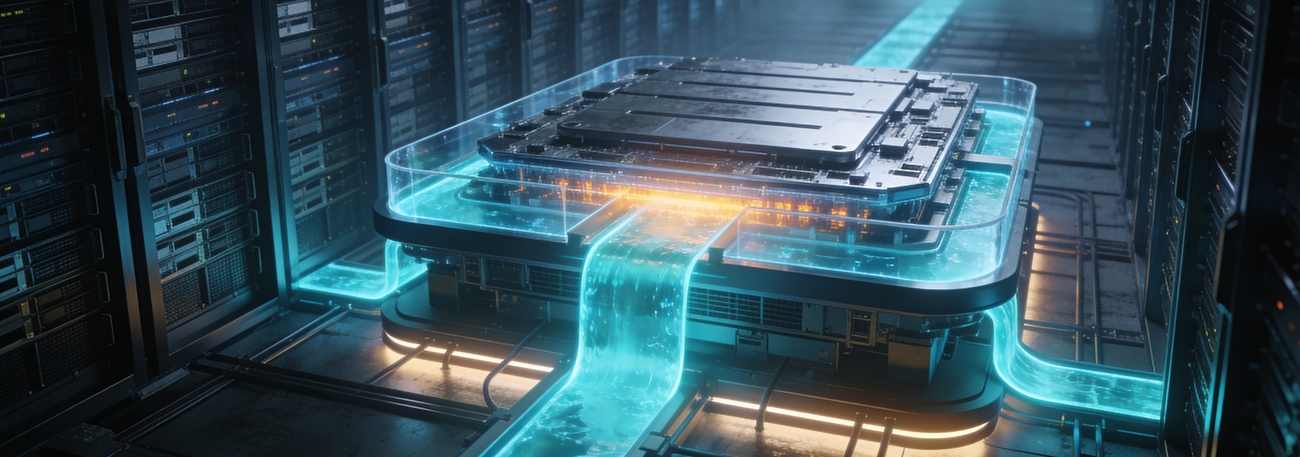
The mainstream narrative surrounding AI data center water usage often relies on sensationalism, reductively equating computational queries to high environmental costs without considering the superior efficiency of modern infrastructure. While traditional power generation consumes up to 20 L/kWh, advanced AI data centers utilizing closed-loop liquid cooling can operate at less than 0.2 L/kWh, significantly outperforming broader industry averages. As chip thermal design power approaches 1,000W, the industry is transitioning from passive air cooling to strategic thermal orchestration, aiming for a water-neutral future through glycol-based systems that do not draw from local municipal reserves. By cionsidering and shifting to productivity-based metrics and repurposing captured heat for district heating or agriculture, data centers are evolving into sustainable, integrated components of a circular energy economy.
Key Takeaways from the HyperFRAME Research Brief:
- Efficiency Over Sensationalism: Modern AI data centers are significantly more water-efficient than traditional power plants, with advanced direct-to-chip systems using less than 0.2 L/kWh compared to the 20 L/kWh required by coal-fired generation.
- Technological Shift to Liquid Cooling: With rack densities pushing toward 100 kW, the industry is moving toward direct liquid cooling (DLC)—projected for 50% market adoption by 2026—which is 25 times more efficient at heat transfer than traditional air cooling.
- Water-Neutral Infrastructure: Leading manufacturers like Dell and Lenovo are pioneering closed-loop secondary circuits and glycol-based systems that eliminate the need for evaporative water consumption, effectively protecting local public water supplies.
- Circular Energy Economy: Beyond cooling, the industry is beginning to repurpose concentrated heat captured by liquid systems for agriculture and district heating, transforming data centers from energy consumers into sustainable grid assets.


Ron Westfall | VP and Practice Leader for Infrastructure and Networking
Ron Westfall is a prominent analyst figure in technology and business transformation. Recognized as a Top 20 Analyst by AR Insights and a Tech Target contributor, his insights are featured in major media such as CNBC, Schwab Network, and NMG Media.
His expertise covers transformative fields such as Hybrid Cloud, AI Networking, Security Infrastructure, Edge Cloud Computing, Wireline/Wireless Connectivity, and 5G-IoT. Ron bridges the gap between C-suite strategic goals and the practical needs of end users and partners, driving technology ROI for leading organizations.
Share

Steven Dickens | CEO HyperFRAME Research
Regarded as a luminary at the intersection of technology and business transformation, Steven Dickens is the CEO and Principal Analyst at HyperFRAME Research.
Ranked consistently among the Top 10 Analysts by AR Insights and a contributor to Forbes, Steven's expert perspectives are sought after by tier one media outlets such as The Wall Street Journal and CNBC, and he is a regular on TV networks including the Schwab Network and Bloomberg.