
















Research Finder
Find by Keyword
Can Broadcom make telcos believe in a private cloud future?
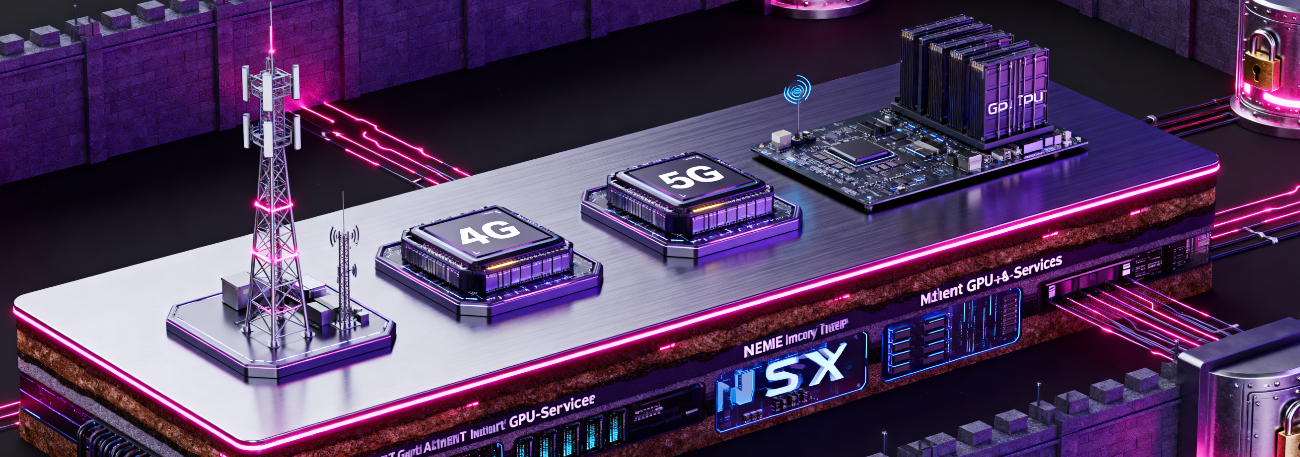
Broadcom aims to deliver a unified, sovereign-ready environment that merges traditional 5G network functions with emerging AI-native workloads on a single platform.
03/03/2026
Key Highlights
- Unified infrastructure aims to deliver a 40% reduction in five-year total cost of ownership by eliminating operational silos.
- GPU virtualization and GPU-as-a-service are designed to allow service providers to partition and monetize hardware across multiple tenants.
- Advanced NVMe memory tiering and vSAN global deduplication target a 38% reduction in memory and storage costs, respectively.
- Sovereign cloud capabilities allow carriers to maintain exclusive cryptographic authority and control over encryption keys within local borders.
The News
Broadcom recently unveiled VMware Telco Cloud Platform 9 at Mobile World Congress 2026, marking a significant architectural shift toward hardware efficiency and AI monetization. The platform integrates the core innovations of VMware Cloud Foundation 9 to provide a horizontal foundation for both 4G/5G core functions and data-intensive AI applications. Operators looking for more information on the specific cost-saving models and deployment strategies can find out more by clicking here to read the press release.
Analyst Take
The telecommunications industry has spent the better part of a decade chasing the ghost of the "Techco" pivot, trying to move from being mere providers of pipes to becoming agile platform players. We see the announcement of VMware Telco Cloud Platform 9 as a pragmatist’s response to the ballooning costs of this ambition. Broadcom is moving away from the fragmented, bespoke telco stacks of the past and pushing a highly standardized, horizontal architecture. The underlying message is clear: if you cannot beat the hyperscalers on global reach, you must beat them on efficiency and sovereignty.
We find the focus on sovereign cloud particularly telling. As nations increasingly view data as a strategic asset, telcos are being tasked with guarding national digital borders. By providing tools that ensure encryption keys never leave the carrier's premises and that data stays within specific geographic boundaries, Broadcom is positioning itself as the safe choice for regulated industries. This is not just a technical feature; it is a business strategy designed to help telcos recapture revenue from government and healthcare sectors that are wary of the large public cloud providers.
What Was Announced
The technical details of the release center on the transition to VMware Cloud Foundation 9 as the bedrock. The platform is architected to support high-core-count CPUs and utilizes Intelligent Resource Scheduling to improve throughput-per-watt, which aims to lower power consumption by up to 30% according to data shared in the press release. On the storage side, the inclusion of vSAN ESA Global Deduplication is designed to remove duplicate data blocks across clusters, effectively stretching existing hardware further.
The networking layer has been updated with VMware NSX, featuring an enhanced data path that aims to deliver significantly higher switching performance for 5G traffic. For AI workloads, the platform introduces GPU virtualization, which allows a single physical GPU to be partitioned among multiple virtual machines. This is paired with a multi-tenant GPU-as-a-service architecture, designed to provide on-demand access to virtualized power while keeping tenant data isolated. To address the complexity of upgrades, the platform introduces modernized Containers as a Service lifecycle management, featuring skip-level upgrades and chained Kubernetes-to-Kubernetes updates. Security is bolstered by a centralized SecOps dashboard and a Kubernetes policy manager based on Open Policy Agent, which aims to automate compliance with standards like the UK Telecommunications Security Act.
We see the move toward "Live Patching" as a vital operational shift. By allowing security updates to be applied to hosts without disrupting active virtual machines, Broadcom aims to deliver the 100% uptime that carrier-grade networks demand. This eliminates the traditional maintenance windows that have long been a headache for network operations teams. The addition of AI-assisted operations, which uses intelligent assistants for troubleshooting, suggests a move toward intent-based networking where the platform can self-heal under the guidance of a human operator.
The financial narrative Broadcom is weaving is also worth noting. By claiming an estimated 40% saving in total cost of ownership over five years, they are making an aggressive pitch to CFOs who are tired of the "death by a thousand cuts" associated with maintaining multiple siloed environments for different network generations. We observe that this consolidation is the real play here. By running 4G, 5G, and AI on the same rails, telcos can finally start to decommission the expensive, legacy-specific hardware that clutters their data centers.
Looking Ahead
Based on what we are observing, the success of Telco Cloud Platform 9 will depend entirely on how well Broadcom manages the current tension between its new subscription-only licensing model and the long-term budget cycles of global carriers. The move to a unified VCF 9.0 core simplifies the product portfolio, but it also creates a high-stakes environment for telcos who are now tied more closely than ever to a single vendor's roadmap. We will be closely monitoring whether the promised hardware efficiencies actually manifest in real-world deployments or if the integration complexity of legacy systems continues to act as a drag on adoption.
The key trend we are looking out for is the rise of "Sovereign AI." As highlighted by recent McKinsey analysis, national competition over critical technologies is intensifying. Broadcom is clearly betting that telcos will become the primary providers of localized AI factories. When you look at the market as a whole, this announcement puts Broadcom in direct competition with the "cloud-in-a-box" offerings from the likes of Ericsson and Nokia, as well as the hybrid cloud extensions from Azure and AWS. However, Broadcom’s advantage lies in its horizontal nature; it doesn't care whose network functions you run, as long as they run on VMware. HyperFRAME will be tracking how the company performs in securing these high-value sovereign contracts in the coming quarters, as this will be the true litmus test for their "Private Cloud" vision.

Steven Dickens | CEO HyperFRAME Research
Regarded as a luminary at the intersection of technology and business transformation, Steven Dickens is the CEO and Principal Analyst at HyperFRAME Research.
Ranked consistently among the Top 10 Analysts by AR Insights and a contributor to Forbes, Steven's expert perspectives are sought after by tier one media outlets such as The Wall Street Journal and CNBC, and he is a regular on TV networks including the Schwab Network and Bloomberg.