

















Research Finder
Find by Keyword
Does Free Space Awareness Data Kill the Commercial Tracking Market?
Stargaze deploys free-to-access satellite collision warnings for operators globally, a private-sector SSA standard that could reframe government programs while pressuring COMSPOC, HawkEye 360, NorthStar and rivals to differentiate their offerings from ‘where’ satellites are to ‘what’ they are doing.
05/03/2025
Key Highlights
- SpaceX's Stargaze system leverages approximately 30,000 onboard star trackers to detect around 30 million orbital transits daily, providing a near-real-time catalog of Low Earth Orbit.
- Stargaze data and Conjunction Data Messages are offered to all satellite operators at no charge (but with reciprocity requirements), lowering the barrier to entry for orbital collision avoidance across the industry.
- By operating from orbit rather than from the ground, Stargaze is architected to eliminate atmospheric distortion, weather interference, and geographic blind spots that constrain legacy radar systems.
- The Starlink constellation serves over 10 million broadband users across five continents; additional Direct-to-Cell service adds urgency to robust traffic management given the larger cross-section of those satellites.
- SpaceX's decision to commoditize SSA data positions the company as infrastructure provider to the entire orbital ecosystem, a strategic move that could accelerate regulatory pressure on commercial rivals to share their own tracking data.
The News
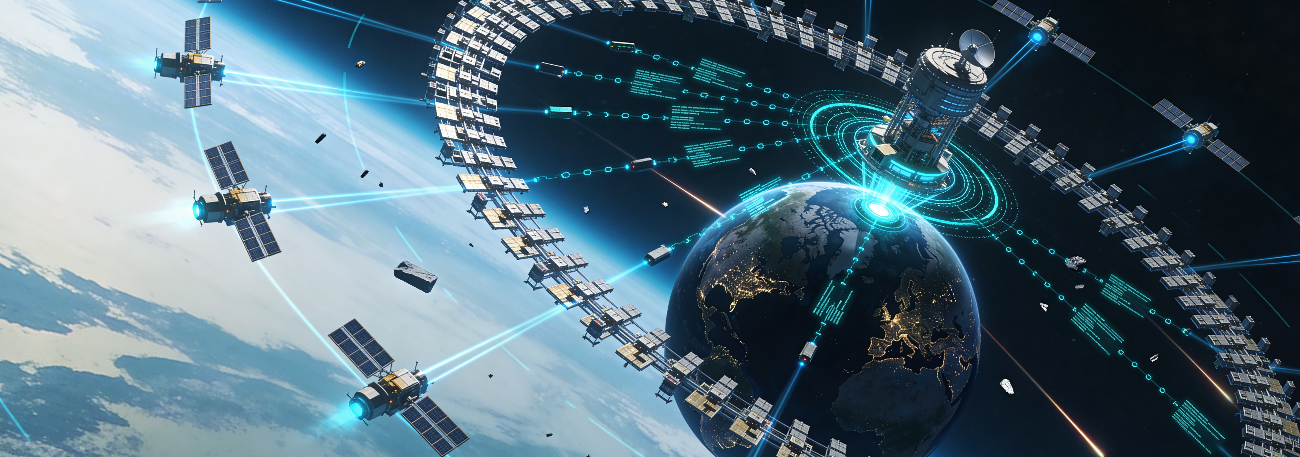
SpaceX recently announced Stargaze, a Space Situational Awareness (SSA) system designed to transform the existing Starlink fleet into the world's largest distributed orbital sensor network by repurposing the star-tracker navigation sensors already installed on each satellite. The system aims to capture roughly 30 million object transits per day across nearly 30,000 sensors; that provides high-fidelity orbit estimates with automated Conjunction Data Messages (CDMs) warning operators of potential close approaches. SpaceX is making this data available to all satellite operators without charge. The company’s rationale is that all satellite operators have a shared interest in preventing the orbital collisions that would generate debris threatening not only the Starlink constellation,m but potentially all satellites in orbit. Full details are available at starlink.com/updates/stargaze.
Analyst Take
SpaceX didn’t build an incremental product upgrade with Stargaze. It quietly redefined what orbital infrastructure means. Our read of this initiative is that it represents a deliberate strategy to embed SpaceX capability at the center of every other operator's safety workflow, independent of whether those operators are customers, partners, or direct competitors. That is a level of strategic leverage that very few companies across any industry have ever engineered, and the decision to offer the data for free is where the real story begins. Free access is not altruism. It is a land-grab for influence over the norms, data formats, and safety protocols that will govern Low Earth Orbit for the next decade.
Incidentally, while most companies would interact with the government, obtain research grants, create requirements documents and work them through the government procurement system for decades. SpaceX basically flips a switch. They needed to have this sensor network anyway, and the unprecedented scale of Starlink and the SpaceX Falcon 9 launch cadence makes this kind of sudden evolutionary step possible.
The SSA market context matters here. The global SSA market is currently valued at approximately USD 1.73 billion, and on track to approach USD 2.79 billion by 2030 at roughly a 10 percent compound annual growth rate (MarketsandMarkets, but analysts vary due to different SSA use cases). That is the market SpaceX has chosen not to monetize directly, at least not yet. The contrarian observation worth sitting with is this: by refusing to price the data, SpaceX may be deliberately foreclosing the revenue opportunity for every commercial SSA provider in the market today, including LeoLabs, Slingshot Aerospace, and ExoAnalytic Solutions, companies that have raised significant capital on the premise that high-fidelity tracking data is scarce and therefore valuable. It was, until SpaceX switched over to using sensors already in orbit on thousands of its satellites. Stargaze erodes that scarcity overnight.
What Was Announced
The technical architecture of Stargaze is worth examining closely, because the innovation is not in any single component but in the aggregation model. Star trackers are standard equipment on spacecraft, designed to determine orientation by observing fixed stellar backgrounds. SpaceX engineers recognized that these sensors continuously detect transits of non-stellar objects, capturing the streaks and vectors of satellites and debris passing through the field of view. Starlink satellite counts are now over 9800 currently operating in orbit, this essentially creates a planetary-scale sensor array above the Earth instead of peering up at satellites from beneath the atmosphere.
Processing 30 million daily observations requires substantial computational work. The pipeline is designed to operate primarily at the edge, with each satellite performing initial analysis to filter known stars and isolate orbital objects, transmitting only the resulting vector data to ground stations. Incidentally, this also immediately becomes one of the largest edge AI project use cases in existence. This approach is architected to preserve network bandwidth for the primary internet connectivity mission while running the SSA function as an essentially free secondary workload. The output feeds a conjunction screening platform that accepts operator-submitted ephemeris data and returns tailored CDM alerts when predicted close approaches fall below acceptable separation thresholds.
The comparison to ground-based legacy systems is meaningful. Traditional radar and optical networks observe a given object a limited number of times per day as it transits overhead, creating gaps in what the industry terms "custody" of the object. The Stargaze network is positioned to maintain near-continuous custody by passing observation responsibility from satellite to satellite as objects move through orbital planes. The practical outcome is reduced covariance, the positional uncertainty envelope around a tracked object, which directly determines whether a conjunction alert is a genuine threat or a false alarm that burns satellite fuel on an unnecessary maneuver.
Market Analysis
The competitive and regulatory dynamics here are layered. On the commercial side, NOAA's Office of Space Commerce has been developing the Traffic Coordination System for Space (TraCSS), which as of February 2026 had approximately 17 pilot users. That number is telling. Government-sponsored traffic management has struggled to achieve the adoption and data quality required to serve a commercially dense orbital environment. Stargaze enters that vacuum with a system backed by the operational credibility of a company that manages more satellites than any other entity on the planet.
For competitors in the broadband satellite market, specifically Amazon Project Kuiper and Eutelsat OneWeb, the dynamic is unusual. Stargaze delivers a genuine safety benefit to operators that are commercial rivals in every other respect. This mirrors the logic that governs aviation and maritime safety standards, where protocol interoperability is recognized as a precondition for commercial viability rather than a competitive concession. According to MarketsandMarkets analysis, the SSA market's payload systems segment is projected to grow at the fastest rate through 2030, precisely the hardware category that Stargaze delivers at no incremental cost to the orbital community. For now.
The regulatory implication we are watching closely is whether the existence of Stargaze shifts the burden of proof in FCC spectrum and orbital licensing proceedings. Historically, regulators have lacked the data granularity to enforce meaningful conjunction standards. A private system generating 30 million daily observations changes what regulators can credibly ask operators to demonstrate before authorizing new constellation deployments. That is a structural shift in the regulatory environment, not merely a technical upgrade, and it is one that SpaceX is uniquely positioned to benefit from as the party that controls the data pipeline.
The downstream regulatory consequence deserves its own thread. The FCC has historically lacked the data resolution to mandate meaningful conjunction performance standards as a condition of constellation licensing. That constraint disappears when a private system is producing 30 million high-fidelity observations daily. Regulators now have a credible technical basis to require demonstrated collision avoidance compliance at renewal, and SpaceX, as the data provider, sits in a structurally advantaged position every time that standard is applied.
The Kessler Syndrome is a concept anticipating that the density of objects in Low Earth Orbit becomes high enough that collisions between them generate debris, which then causes further collisions, which generates more debris, triggering a self-sustaining cascade. That theory has moved from theoretical modeling exercise to active operational concern inside defense and academic communities. Recent cascade probability analyses suggest that a single high-energy fragmentation event in a densely occupied shell could render that altitude band commercially unusable within years rather than decades. Stargaze addresses the observability gap that sits at the center of that risk: you cannot avoid what you cannot see, and ground-based radar has never been able to see enough.
Looking Ahead
HyperFRAME will be monitoring how the Stargaze availability reshapes procurement decisions in the commercial SSA sector over the next 12 to 18 months. The immediate question is whether established providers such as LeoLabs and Slingshot Aerospace can differentiate their offerings around specialized analytics, cislunar tracking, or government-classified domains where SpaceX data cannot easily flow. The longer arc is whether Stargaze becomes the de facto ground truth for orbital conjunction assessment globally, at which point the company that operates the data standard effectively operates the traffic signal for all of Low Earth Orbit. That is an infrastructure position with no obvious parallel in the commercial space era, but SpaceX has rewritten most of that book already. We will also be tracking how Version 3 Starlink satellites, designed for launch aboard Starship at significantly larger scale, interact with a traffic management framework that SpaceX itself controls. The incentive alignment there warrants careful scrutiny from regulators and competing operators alike.

Stephen Sopko | Analyst-in-Residence – Semiconductors & Deep Tech
Stephen Sopko is an Analyst-in-Residence specializing in semiconductors and the deep technologies powering today’s innovation ecosystem. With decades of executive experience spanning Fortune 100, government, and startups, he provides actionable insights by connecting market trends and cutting-edge technologies to business outcomes.
Stephen’s expertise in analyzing the entire buyer’s journey, from technology acquisition to implementation, was refined during his tenure as co-founder and COO of Palisade Compliance, where he helped Fortune 500 clients optimize technology investments. His ability to identify opportunities at the intersection of semiconductors, emerging technologies, and enterprise needs makes him a sought-after advisor to stakeholders navigating complex decisions.