

















Research Finder
Find by Keyword
Can AI Infrastructure Ever Be Truly Vendor Neutral?
Equinix launches its Distributed AI Hub to unify siloed AI workloads through global private interconnection and real-time security.
03/11/2026
Key Highlights
- The new Distributed AI Hub provides a single architectural framework to connect disparate AI models, GPU clouds, and data platforms.
- A strategic integration with Palo Alto Networks Prisma AIRS aims to deliver semantic threat detection and real-time security guardrails.
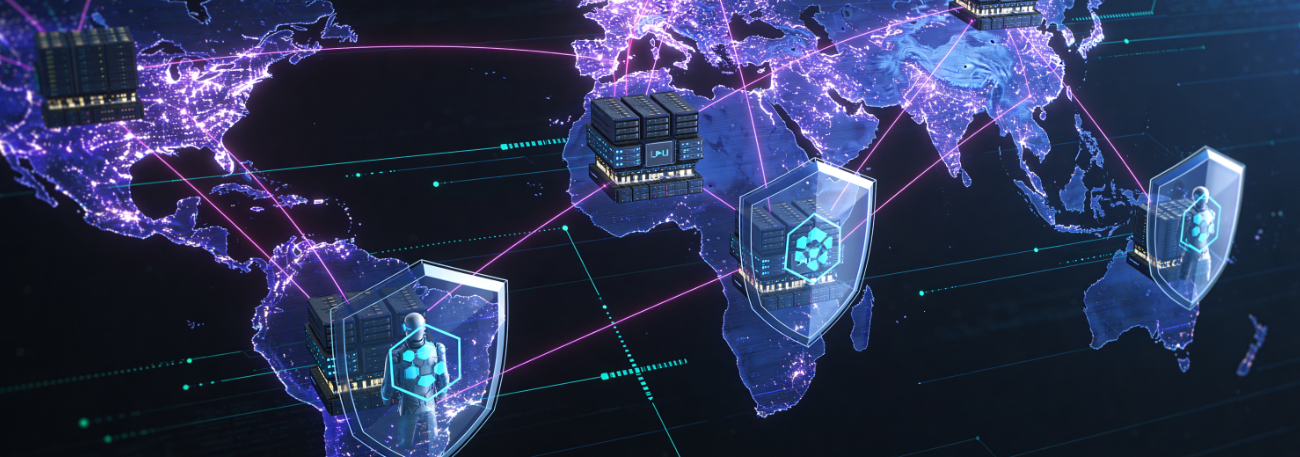
- The solution is architected to run inference workloads closer to users and data sources across 280 global data center locations.
- Enterprises can now manage multi-agent AI ecosystems without the operational friction of rebuilding infrastructure for each new provider.
The News
Equinix has introduced its Distributed AI Hub, a vendor-neutral environment designed to simplify how enterprises connect and secure their distributed AI ecosystems. Powered by Equinix Fabric Intelligence, the platform allows for private, low-latency interconnection between model providers, data platforms, and security services. The announcement includes a significant partnership with Palo Alto Networks to integrate real-time AI security directly into the network edge. Find out more by clicking here to read the press release.
Analyst Take
We see a significant shift in how enterprises are approaching the physical reality of artificial intelligence. For the past year, the focus has been on the models themselves, but the conversation is rapidly moving toward the plumbing required to make these models work at scale. The primary challenge we observe is the inherent fragmentation of AI workflows; training data might sit in a private data center, while inference happens in a public cloud, and the end users are scattered globally. This creates a messy "maze of silos" that complicates governance and drives up data egress costs. Equinix is positioning itself as the connective tissue that bridges these gaps, and we believe its timing is quite deliberate.
What Was Announced
The Distributed AI Hub is architected to function as a unified framework that brings together compute, data, and AI partners in a vendor-neutral environment. The technical foundation relies on Equinix Fabric Intelligence to facilitate private, high-speed connections between 280 high-performance data centers. A key technical component is the integration with Palo Alto Networks Prisma AIRS, which is designed to provide real-time protection for agent and model interactions. This security layer aims to deliver semantic inspection of AI prompts and responses, detecting threats like prompt injection or data exfiltration that traditional perimeter defenses might miss. According to the HyperFRAME Research Lens 53% of respondents identify security hacks as a critical concern, but only 40% have institutionalized a dedicated AI governance committee. So this concern is well placed
The move toward "agentic AI" is a theme we find particularly compelling. Unlike early AI implementations that were largely static, agentic AI involves multiple autonomous agents interacting with various data sources and models. This complexity makes the network the most logical place for security and orchestration to live. We see the partnership with Palo Alto Networks as a move to provide "guardrails" that don't sacrifice performance. By moving security inspection to the gateway layer, Equinix aims to deliver a standardized interface for all Large Language Model (LLM) providers. This is designed to prevent vendor lock-in, a common concern for CIOs who fear being tethered to a single hyperscaler’s ecosystem.
We are observing that many enterprises have reached a point of "experimental exhaustion" where hundreds of internal AI pilots are running in isolation. This fragmentation leads to inconsistent security and redundant infrastructure spending. The Distributed AI Hub aims to deliver a centralized control point to harmonize these efforts. According to research by Deloitte, nearly 70% of organizations cite data privacy and security as the top barriers to scaling generative AI. By offering private interconnection rather than relying on the public internet, Equinix is directly addressing the sovereignty and privacy concerns that currently keep many enterprise AI projects in the proof-of-concept phase.
It is also worth noting the strategic importance of "data gravity." According to HyperFRAME Research, data only 14.3% of 544 respondents said they have a fully modernized AI-ready data architecture. AI models are only as good as the data they are fed, and moving massive datasets to the cloud is often prohibitively expensive and slow. We see Equinix leveraging its existing footprint to keep compute close to where the data resides. This architecture aims to reduce latency for real-time applications, such as autonomous supply chain agents or real-time fraud detection. The Hub is not merely a marketplace; it is a physical meeting point where the "specialized neoclouds"—those rising GPU-specific providers—can meet the established enterprise data stored in Equinix cabinets.
Looking Ahead
Based on what we are observing, the industry is entering a post-hyperscaler phase where neutral interconnection hubs become more valuable than any single cloud provider's proprietary stack. The key trend we are going to be looking out for is whether enterprises actually embrace this neutral "compositional" approach or if the gravity of the big three cloud providers remains too strong to resist. Our perspective is that as AI agents become more autonomous, the need for a "network-level" security layer will become a non-negotiable requirement rather than a luxury.
Going forward, we are going to be closely monitoring how Equinix performs in attracting specialized AI hardware providers and "neoclouds" into this ecosystem. When you look at the market as a whole, the announcement signals a move away from the "all-in-one" cloud model toward a more sophisticated, hybrid reality. This mirrors the shifts we have seen in traditional IT over the last decade, but at a significantly faster pace. HyperFRAME will be tracking how the company does in future quarters in terms of actual enterprise adoption of the Fabric Intelligence layer versus traditional colocation.
The move by Equinix effectively challenges the dominance of hyperscaler marketplaces by offering an alternative that prioritizes data sovereignty and performance over vertical integration. In the context of the wider market, we see this as a necessary evolution. If AI is to become as ubiquitous as the internet itself, it cannot be confined to the walls of a few providers. The success of this Distributed AI Hub will likely depend on how effectively Equinix can prove that its "neutral ground" provides better ROI than the integrated, yet restrictive, ecosystems of its competitors.

Steven Dickens | CEO HyperFRAME Research
Regarded as a luminary at the intersection of technology and business transformation, Steven Dickens is the CEO and Principal Analyst at HyperFRAME Research.
Ranked consistently among the Top 10 Analysts by AR Insights and a contributor to Forbes, Steven's expert perspectives are sought after by tier one media outlets such as The Wall Street Journal and CNBC, and he is a regular on TV networks including the Schwab Network and Bloomberg.