











Research Finder
Find by Keyword
Dell Doubles Down on Server Hardware For The AI Era
Dell launches a massive, AI-focused infrastructure overhaul to capture the next generation of data center compute spend.
5/20/2026
Key Highlights
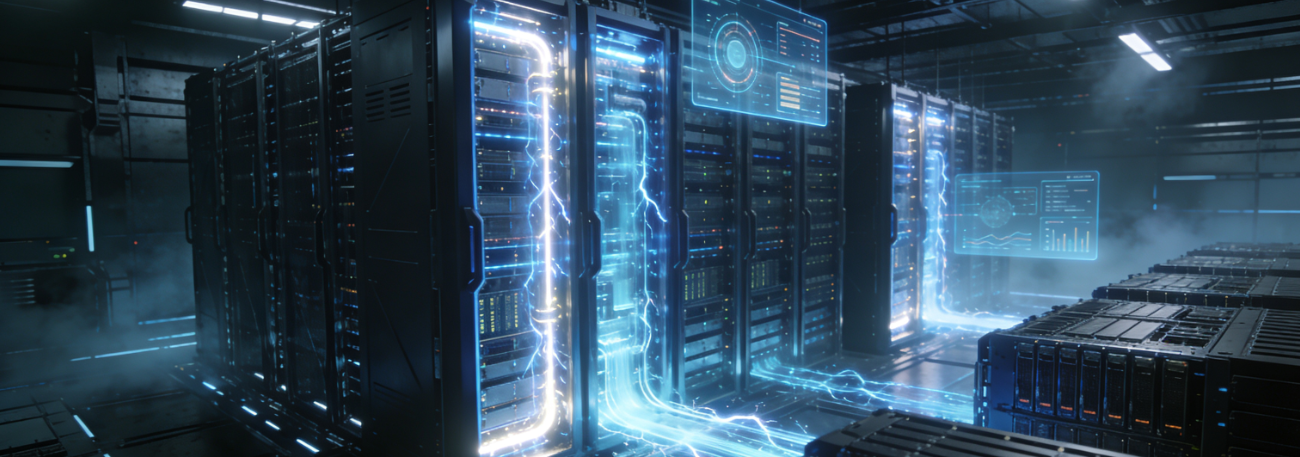
- Eleven new 18th-generation PowerEdge servers introduce advanced liquid-and air-cooling designs to pack dense compute into tighter data center spaces.
- New updates to Automation Platform
The News
Dell Technologies introduced a massive refresh of its data center hardware, software, and automation portfolios at its annual event, launching next-generation storage platforms and a fleet of 18th-generation servers. The announcements focus entirely on helping enterprise customers manage the extreme thermal, density, and management overhead associated with running modern workloads. The updates include a new class of intelligent storage, liquid-cooled enterprise compute architectures, integrated cyber resilience tooling, and AI-driven infrastructure automation frameworks. You can find out more by clicking here to read the press release.
Analyst Take
We see a clear pattern emerging where enterprise IT organizations are struggling to balance traditional corporate applications with the compute-hungry reality of modern analytical workloads. Infrastructure teams do not have the luxury of starting from scratch; they must retrofit existing facilities. This reality forms the backbone of Dell's sweeping updates across its storage, compute, and management portfolios.
This physical squeeze is validated by HyperFRAME Lens data, which reveals that 60.7% of organizations identify infrastructure as a "very significant" challenge in adopting and scaling their AI stack.
What Was Announced
The compute expansion is driven by eleven new models in the 18th generation of Dell PowerEdge servers, which are designed to deliver up to 70% better performance and up to 13-to-1 server consolidation ratios through updated thermal engineering. Foremost among these is the Dell PowerEdge M9825, a liquid-cooled system featuring AMD EPYC 6th Generation processors. This server is factory-integrated into Dell IR7000 racks and is architected specifically to scale beyond the power and thermal limits of traditional air-cooled configurations. For organizations requiring high-performance compute without liquid infrastructure, Dell introduced the PowerEdge R7825, an air-cooled, dual-socket platform utilizing AMD EPYC processors. Dell also expanded its dense PCIe-based offerings and introduced space-efficient systems optimized for enterprise consolidation.
To achieve the massive 13-to-1 consolidation ratio across this fleet, Dell overhauled its structural chassis layout, optimizing airflow pathways and internal component placement. This redesign allows the air-cooled PowerEdge platforms to operate efficiently even at higher ambient data center temperatures, delaying the need for expensive ambient cooling upgrades. Meanwhile, the liquid-cooled PowerEdge M9825 represents a major shift toward high-density computing. By integrating direct-to-chip liquid cooling directly within the IR7000 rack infrastructure, Dell enables enterprises to deploy maximum-core AMD EPYC processors without risking thermal throttling. This setup effectively captures and removes heat at the source, allowing data centers to pack significantly more raw compute power into a fraction of the traditional physical footprint.
Beyond raw thermal performance, the 18th-generation servers introduce native hardware-level telemetry designed to feed directly into Dell's broader AI operations ecosystem. Each server acts as a self-reporting node, feeding real-time metrics on power consumption, localized heat dissipation, and memory performance back to the management layer. This hardware-to-software bridge allows administrators to dynamically shift workloads away from straining or overheating server blocks, optimizing the lifespan of the underlying components. By expanding its dense PCIe-based offerings alongside these thermal innovations, Dell is tailoring its hardware to bridge the gap between traditional enterprise virtualization and the massive parallel processing demands of localized, mid-sized AI model training and inference.
Dell’s Automation Ambitions
While Dell’s vision of full-stack infrastructure automation via autonomous agents sounds compelling on paper, we have deep skepticism regarding whether enterprises will actually trust a hardware vendor to command this critical layer. Historically, infrastructure teams have preferred to decouple their management software from their underlying physical assets to avoid restrictive vendor lock-in. When it comes to real-time monitoring and predictive insights, enterprises are far more likely to lean heavily on specialized, core observability giants like Datadog, Dynatrace, and Splunk, which already possess comprehensive visibility across complex, multi-vendor environments. Dell's automated operations software lacks the deep, end-to-end application context that these established observability platforms have spent over a decade perfecting.
Similarly, when it comes to the orchestration and provisioning of infrastructure as code, Dell faces an uphill battle against deeply entrenched, platform-agnostic industry standards. Enterprises have already standardized their automation pipelines on independent tools like Red Hat Ansible for configuration management and IBM’s HashiCorp suite for multi-cloud infrastructure deployment. These cross-platform ecosystems are universally favored because they seamlessly abstract away the underlying hardware, allowing teams to manage Dell servers, public cloud instances, and edge devices through a single, unified workflow. Ultimately, convincing enterprise IT buyers to abandon these universal, battle-tested software suites in favor of a hardware-centric automation layer remains an incredibly tough sell for Dell, and arguably one where an ecosystem play would probably be preferable.
Looking Ahead
he broader enterprise infrastructure landscape, the true battleground has shifted from raw component specifications to full-stack integration and physical facility optimization. Recent research from McKinsey highlights that data center power consumption is expected to reach historic highs by the end of the decade, making energy efficiency and thermal management the primary constraints on enterprise growth. Dell's aggressive push into liquid-cooled rack architectures and multi-generation storage clustering directly addresses this macro trend.
The key trend that we are going to be looking out for is how effectively enterprise IT buyers can actually adopt these dense, liquid-cooled architectures without undergoing costly facility overhauls. While the technical achievements of the 18th-generation PowerEdge systems are clear, their real-world utility depends on a data center's underlying power and cooling topology. Going forward, we are going to be closely monitoring how the company performs on accelerating the adoption of its automated operations software, as hardware normalization makes software-defined orchestration the ultimate differentiator.
The announcement positions Dell as a formidable gatekeeper for hybrid cloud infrastructure, especially as legacy competitors scramble to match their supply chain execution and deep component-level partnerships with chipmakers like AMD. HyperFRAME will be tracking how the company does in translating these dense, high-margin hardware architectures into sustained market share gains in future quarters. Ultimately, this rollout demonstrates that while software grabs the headlines, physical engineering dictates the pace of technological deployment.

Steven Dickens | CEO HyperFRAME Research
Regarded as a luminary at the intersection of technology and business transformation, Steven Dickens is the CEO and Principal Analyst at HyperFRAME Research.
Ranked consistently among the Top 10 Analysts by AR Insights and a contributor to Forbes, Steven's expert perspectives are sought after by tier one media outlets such as The Wall Street Journal and CNBC, and he is a regular on TV networks including the Schwab Network and Bloomberg.