














Research Finder
Find by Keyword
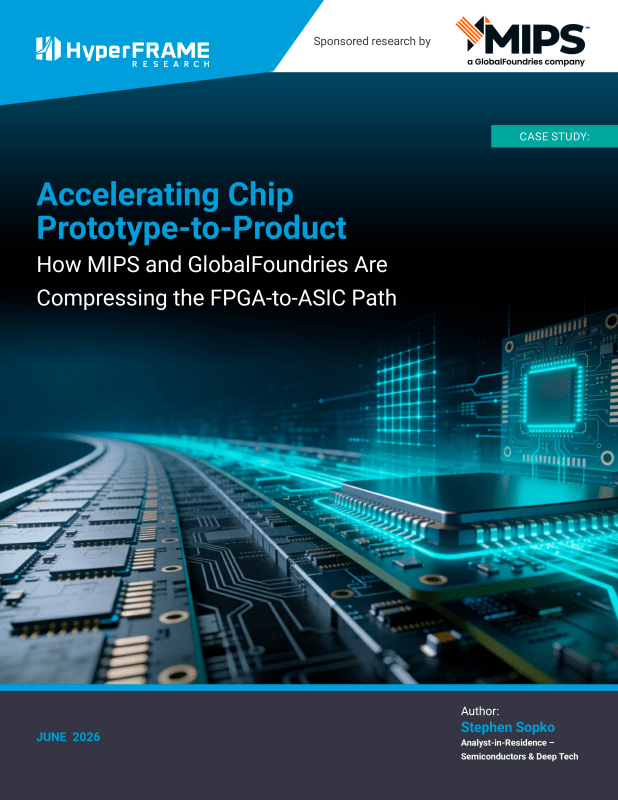
Accelerating Chip Prototype-to-Product
How MIPS and GlobalFoundries Are Compressing the FPGA-to-ASIC Path

The FPGA-to-ASIC transition has long been a bet-the-company
moment. It doesn't have to be.
For most chip startups, moving from a validated FPGA prototype to a productizable ASIC means navigating a gauntlet of design houses, foundries, and packaging partners, each managing their own timeline and each pointing at the other when something breaks. The historical baseline is two-plus years and costs approaching seven figures, before the first piece of silicon comes back.
HyperFRAME Research examined what a different model looks like in practice. Our June 2026 case study follows Apex Compute, a Bay Area edge AI startup that moved from seed funding to a working full-stack FPGA dev kit in under ten months, and is now on track to tape out a productizable ASIC by end of year.
The enabler is the integration of MIPS as a GlobalFoundries company, paired with the closing of the Synopsys ARC Processor IP Solutions acquisition. Design IP, SoC integration, foundry access, and software bring-up now consolidate under a single accountable partner, compressing the iron triangle of time, risk, and cost in ways the legacy multi-vendor model structurally cannot match.
For chip teams evaluating the prototype-to-product transition, this case study is the clearest available map of what that path looks like today.
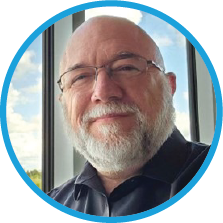
Stephen Sopko | Analyst-in-Residence – Semiconductors & Deep Tech
Stephen Sopko is an Analyst-in-Residence specializing in semiconductors and the deep technologies powering today’s innovation ecosystem. With decades of executive experience spanning Fortune 100, government, and startups, he provides actionable insights by connecting market trends and cutting-edge technologies to business outcomes.
Stephen’s expertise in analyzing the entire buyer’s journey, from technology acquisition to implementation, was refined during his tenure as co-founder and COO of Palisade Compliance, where he helped Fortune 500 clients optimize technology investments. His ability to identify opportunities at the intersection of semiconductors, emerging technologies, and enterprise needs makes him a sought-after advisor to stakeholders navigating complex decisions.