
















Research Finder
Find by Keyword
Marvell Structera: Driving CXL Hardware Optimization and AI Memory Efficiency
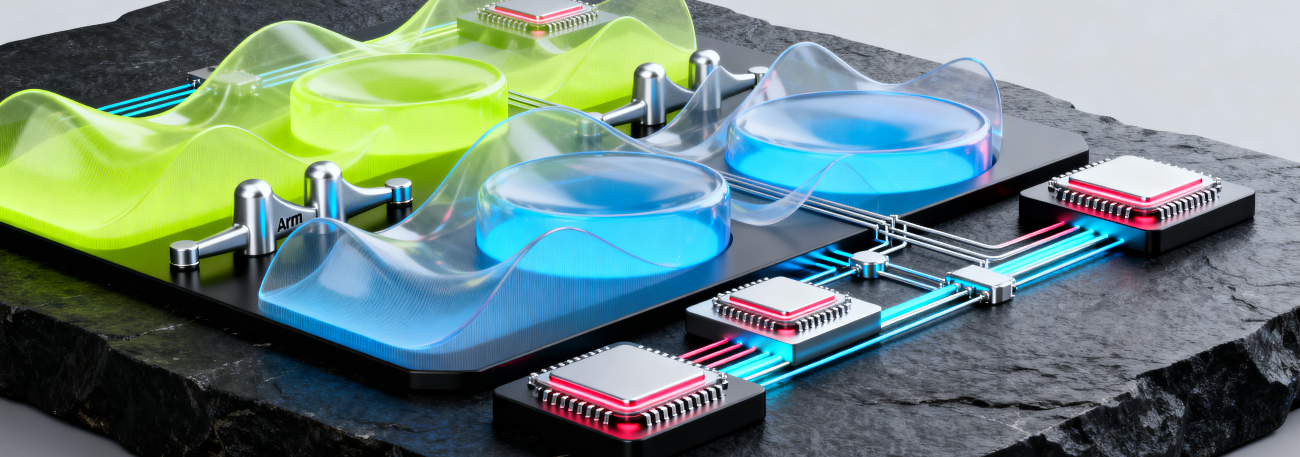
Marvell is positioning its Structera portfolio as a premier architectural alternative for cloud infrastructure providers by consolidating dedicated hardware compression, Arm-driven near-memory computing, and low-latency CXL switching into a unified fabric that circumvents the software complexity, volatile DRAM costs, and tail-latency bottlenecks of single-component alternatives.
06/28/2026
Key Highlights
- The Structera portfolio introduces a dedicated, hardware-based CDB that executes transparent, lossless 2:1 LZ4 data compression at full line rate, running completely invisibly to the host CPU and operating system.
- By doubling effective capacity in hardware, the Structera architecture enables cloud infrastructure providers to cut the cost per gigabyte of memory pools in half, mitigating the 300% to 400% surge in DDR5 RDIMM spot prices driven by AI buildouts.
- Because line-rate compression and memory expansion occur entirely in dedicated silicon, the system eliminates the intricate software orchestration, complex NUMA host management, and chaotic page migrations that traditionally trigger tail-latency degradation.
- The Structera A accelerator family combines four memory channels with 16 server-class Arm Neoverse V2 cores directly on the controller, enabling data-intensive workloads such as vector search and DLRM to execute near the data rather than traveling across a high-latency PCIe link.
- Following its acquisition of XConn Technologies, Marvell has integrated sub-microsecond Structera S CXL switches with Structera X expanders and Structera A accelerators, delivering innovative full-stack CXL 2.0/3.0 memory pooling and expansion fabric.
The News
Marvell Technology has introduced the Structera CXL device, featuring a purpose-built, dedicated silicon hardware component known as the Compression-Decompression Block (CDB). For more information, read the Marvell blog by Arifur Rahman, Director of Product Marketing, Custom Cloud Solutions, Marvell.
Analyst Take
The Marvell Structera CXL device integrates a dedicated, hardware-level CDB that operates at full memory bandwidth to optimize data center resource utilization. By executing transparent 2:1 data compression directly in silicon as data moves to and from DRAM, the CDB expands perceived memory capacity completely invisibly to the host CPU and operating system. This architectural integration addresses the high capital expenditures associated with Compute Express Link (CXL) memory pools, where memory modules represent the primary cost component. We see that by halving the cost per gigabyte of usable capacity, the technology enables cloud infrastructure providers to scale memory efficiency without requiring additional physical DIMMs, server modifications, or software rewrites.
Modern AI workloads, including Deep Learning Recommendation Models (DLRM), Large Language Model (LLM) inference, in-memory databases, and vector search engines, are currently bottlenecked by the high cost and systemic scarcity of server-grade DRAM. This structural supply-demand imbalance has caused server-grade DDR5 RDIMM spot prices to surge by 300% to 400% since mid-2025, reaching $27 to $37 per gigabyte and elevating the raw hardware cost of a standard 12TB memory pool to nearly half a million dollars (according to Trendforce, DRAM Spot Price, April 2026 and Sourceability Newsletter, Tracking memory price increases across the last several quarters, March 2026).
While CXL technology has emerged as the industry-standard architecture for physical memory expansion, conventional CXL controllers fail to optimize the financial footprint of these deployments. Because baseline solutions ignore the highly compressible nature of the data occupying these memory pools, a critical architectural lever is left unexploited, creating a distinct market opportunity for hardware-level data compression to further reduce data center capital expenditures.
Marvell Structera: Overcoming CXL Latency and Software Complexity via Hardware Optimization
From our perspective, CXL technology is gaining market inroads because it structurally decouples memory from compute, enabling data centers to scale memory capacity independently without the expensive cost of overprovisioning CPUs or GPUs. By enabling memory pooling and multi-tiered architectures across a standardized PCIe foundation, CXL directly addresses memory inefficiencies and skyrocketing DRAM costs exacerbated by memory-heavy AI inference and vector search workloads.
However, despite this clear economic and operational value proposition, wide-scale market uptake faces a critical challenge in the complexity of the accompanying software stack and orchestration layer. Because moving data to an external CXL tier introduces an incremental hardware latency of 100 to 200 nanoseconds, improper software-driven Non-Uniform Memory Access (NUMA) host management can lead to chaotic page-migration patterns. Consequently, if a data center's operating system and workload-routing policies are not sufficiently mature to intelligently distinguish between hot and cold data pages, the system risks tail-latency degradation that can negate the platform's cost-saving capacity benefits.
We see that the Marvell Structera portfolio directly addresses the operational barriers of software stack complexity, page-migration bottlenecks, and latent NUMA thrashing by executing its core performance optimizations entirely at the hardware layer. At the foundation of this strategy is the architecture of the Structera A near-memory accelerator, which embeds 16 server-class Arm Neoverse V2 processor cores directly onto the CXL controller. By offloading bandwidth-constrained, data-intensive tasks, such as DLRM and vector search, directly to the CXL device, Structera enables near-memory computing, which explicitly moves the workload to the data rather than forcing a high-latency traversal over the PCIe link to the host.
For standard capacity expansion through the Structera X expander, Marvell bypasses the need for intricate software orchestration through its dedicated silicon CDB. Because this hardware block compresses and decompresses data losslessly at full line rate completely invisible to the operating system and host CPU, it presents a massive virtual address space that mitigates the fundamental need for frequent, complex page migrations.
Furthermore, when coupled with the sub-microsecond, low-latency pooling of Structera S CXL switches, the platform ensures near-local shared memory performance that stabilizes tail-latency variations. By abstracting data management, near-memory processing, and line-rate hardware compression entirely out of the software domain, Marvell removes the integration friction that typically undercuts the economic advantages of tiered CXL topologies.
Competitor Landscape and Marvell’s Structural Advantages in CXL
In the CXL memory-expansion and connectivity space, we identify Marvell’s primary competitors as including connectivity specialist Astera Labs, maker of the Leo CXL memory controller, alongside semiconductor giant Broadcom and APAC-focused memory interface provider Montage Technology. While competitors such as Astera Labs have achieved early market inroads by supplying standard, plug-and-play CXL smart controllers and retimers for cloud servers, they lack the deep architectural diversity of Marvell’s full-stack strategy.
From our viewpoint, Marvell delivers a distinct competitive advantage through its holistic Structera portfolio, which elevates CXL into an active, intelligent tier. By embedding 16 server-class Arm Neoverse processor cores directly onto its Structera A accelerators, Marvell enables true near-memory computing that processes workloads directly on the data rather than straining host CPU bandwidth. As a result, by coupling this unique compute capability with a dedicated line-rate compression block and a recently acquired XConn switching fabric, Marvell circumvents the software complexity and tail-latency penalties that challenge standard, single-component alternative offerings.
Looking Ahead
We believe that data center decision-makers must consider the Marvell Structera portfolio because it delivers a breakthrough end-to-end CXL fabric, integrating Structera X expanders, Structera A near-memory accelerators, and the recently launched Structera S switches, to comprehensively conquer the AI memory wall. This hardware-optimized ecosystem vastly expands its influence across cloud environments by being the only CXL product family to achieve verified, production-ready interoperability across all major CPU platforms (Intel and AMD) and memory tiers (DDR4 and DDR5).
Operationally, it redefines infrastructure economics by executing inline LZ4 data compression and specialized Arm-driven vector compute entirely in silicon, freeing up valuable host CPU cycles while enabling operators to recycle older memory DIMMs to slash e-waste. Overall, by offering a flexible business engagement model that includes providing silicon-proven CXL intellectual property for custom ASIC integration, Marvell ensures that its architecture remains highly composable, future-proof, and deeply embedded into next-generation scale-up AI data center designs.

Ron Westfall | VP and Practice Leader for Infrastructure and Networking
Ron Westfall is a prominent analyst figure in technology and business transformation. Recognized as a Top 20 Analyst by AR Insights and a Tech Target contributor, his insights are featured in major media such as CNBC, Schwab Network, and NMG Media.
His expertise covers transformative fields such as Hybrid Cloud, AI Networking, Security Infrastructure, Edge Cloud Computing, Wireline/Wireless Connectivity, and 5G-IoT. Ron bridges the gap between C-suite strategic goals and the practical needs of end users and partners, driving technology ROI for leading organizations.