










Research Finder
Find by Keyword
AI Agents Move Out of The DM: Anthropic Launches Claude Tag In Slack
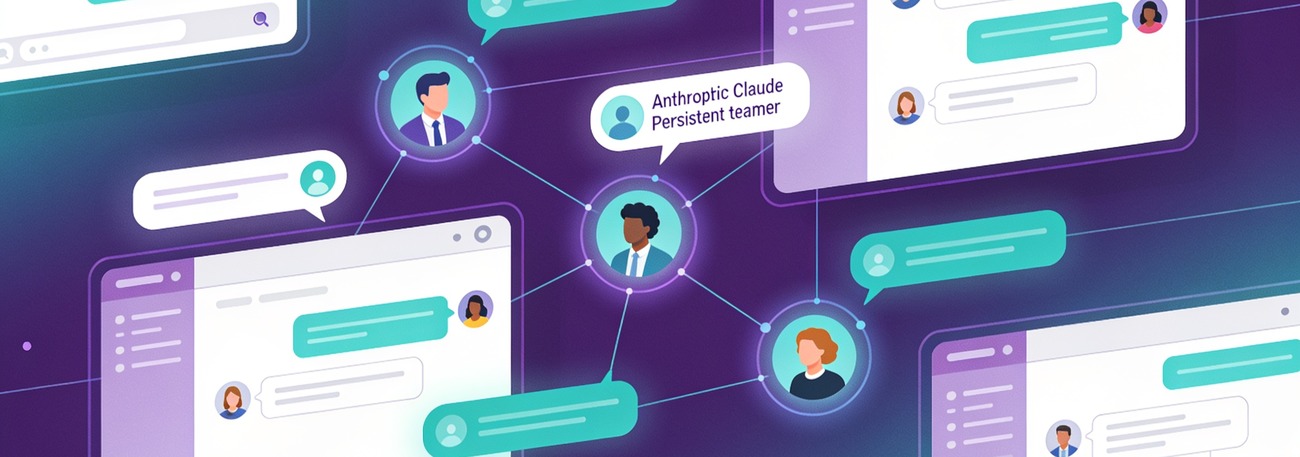
Anthropic introduces persistent, shared agentic identities inside Slack channels, shifting enterprise AI from individual prompts to ambient teamwork.
06/30/2026
Key Highlights
- Anthropic launched Claude Tag, transitioning its Slack presence from a passive direct-message chatbot to a persistent, shared, and asynchronous virtual teammate.
- Operating on the Opus 4.8 foundation model, the system breaks enterprise tasks into distinct execution stages, drawing from connected repositories and multi-channel context.
- An optional ambient monitoring mode permits the agent to proactively monitor permitted communication channels and independently intervene to flag updates or unresolved tasks.
- Administrators must explicitly govern scoped identities per channel to prevent cross-exposure of sensitive corporate resources and codebases.
- Implementation risks include substantial deployment friction, operational retraining burdens, and the management of unpredictable token-spend trajectories.
The News
Anthropic launched Claude Tag in beta for Claude Team and Enterprise customers, establishing a persistent AI agent directly within Slack channels. Moving beyond localized prompt sessions, this shared identity observes team dialogue, accumulates institutional context, and executes multi-step operational tasks asynchronously. Click here for more details.
Analyst Take
The enterprise AI landscape is undergoing an architectural migration away from isolated chat interfaces toward persistent, multiplayer agent fabrics. Our analysis indicates that Anthropic aims to deliver a structural alternative to the fragmented, single-user productivity loop by rooting its agentic identity where human knowledge workers already congregate. This deployment model fundamentally alters how corporate intelligence is aggregated and used.
According to the HyperFRAME Research Lens, 60% of organizations anticipate having multiple foundation models concurrently deployed, underscoring the shift toward diversified, task-specific model environments. This reality underpins the strategic tension of the Anthropic announcement. Anthropic is not merely releasing a software feature; it is making a land grab to dominate the contextual control plane of enterprise collaboration.
This approach introduces immediate operational complexity. The introduction of an autonomous entity that reads conversation histories and executes multi-step scripts challenges established corporate governance frameworks. When an AI agent can read across approved channels to synthesize information, the risk of policy drift escalates.
Furthermore, the HyperFRAME Research Lens reveals that only 40% of enterprises have institutionalized a dedicated AI governance committee, while 53% identify security vulnerabilities as a critical concern. This governance void creates a precarious environment for ambient monitoring technologies. Pragmatic CIOs must ensure Claude Tag is deployed as scoped, channel-specific identities rather than a broadly permissioned enterprise-wide agent. For example, if a team inadvertently leaves customer personally identifiable information or system credentials within a channel history, the agent absorbs that data into its immediate context, risking prompt injection or unauthorized exposure.
There is also deployment friction and operational retraining burdens. Moving from a predictable, user-initiated query model to an ambient, asynchronous agent requires a complete overhaul of team workflows. Teams must learn to manage an entity that works in public view, generates its own code, and post-processes its own outputs. This introduces a subtle but real psychological toll. Workers must shift from being creators to being auditors. If a team fails to rigorously validate the agent's multi-step outputs, silent errors will propagate through connected enterprise codebases and ticketing systems.
Financially, the model replaces predictable SaaS seat licenses with variable consumption risks. While Anthropic provides introductory launch credits, the long-term total cost of ownership remains highly opaque. Administrators can restrict token expenditure, but capping resources mid-task can break critical, multi-day operational pipelines. Competitively, this differs from platform-native approaches from Microsoft and Salesforce, where AI experiences are more tightly coupled to existing application, identity, data, and governance layers. Anthropic is gambling that a lightweight, model-centric insertion layer can outmaneuver deep platform integration.
What Was Announced
According to Anthropic, Claude Tag is architected to replace the traditional, reactive chatbot application with a persistent, shared participant configured specifically for group channels. Operating under its own independent system credentials rather than masquerading as a human user, the agent is designed to follow ongoing channel discussions, accumulate institutional knowledge, and execute delegated assignments over hours or days without requiring the initiating user to maintain an active session.
The core system mechanics require an administrator to pair the product with a Slack workspace, designate permitted channels, connect relevant external tools or code repositories, and establish firm token-consumption limits. The application is engineered to allow any member within a permitted channel to mention the agent to initiate a workflow. Upon receiving a directive, the agent breaks the complex task into distinct, sequential execution stages, processes them using its connected tools, and returns the final artifact within the corresponding Slack thread.
Anthropic highlights an operational design whereby distinct agent configurations can be deployed for separate organizational functions. An instance configured for an engineering department can be isolated to specific codebases and technical channels, while a sales configuration remains bound to its respective customer metrics. The underlying architecture is designed to prevent the cross-pollination of localized memories, ensuring that proprietary engineering context is not inadvertently exposed to sales operations.
Additionally, the product includes an optional ambient behavior configuration. When activated, this mode is designed to monitor channel text proactively, allowing the agent to independently intervene to surface relevant information from across the organization, revisit inactive discussion threads, and follow up on unresolved operational tasks. Administrators retain access to centralized audit logging to track which individual users initiated specific tasks and review the exact sequence of actions performed by the agent.
Looking Ahead
Based on what HyperFRAME Research is observing, the market is quickly outgrowing the novelty of the standalone assistant panel. The key trend to look for is the integration of model-driven memory directly into the corporate communications layer, effectively turning the team chat into an active execution engine. Based on our analysis of the market, our perspective is that Anthropic is capitalizing on its strong enterprise momentum, punctuated by its recent valuation milestones, to challenge incumbent software platforms for ownership of the workflow layer.
Going forward we will closely monitor how the company performs on maintaining multi-tenant security boundaries as these agents transition from beta into mass enterprise deployment. When you look at the market as a whole, the announcement sharpens the competitive divide between horizontal AI providers and entrenched platform vendors. HyperFRAME will be tracking how the company does in mitigating prompt injection vulnerabilities within public channels in future quarters, as this will ultimately dictate enterprise adoption rates.
Anthropic faces steep opposition from platform-native alternatives. For instance, a Microsoft shop might prefer the integrated Microsoft Copilot Studio ecosystem, because it natively enforces Azure-backed security policies across the entire Microsoft 365 Graph without requiring custom, channel-by-channel administrator configuration. Similarly, organizations heavily invested in Snowflake or Databricks may find that keeping intelligence closer to the data warehouse provides superior telemetry normalization and lower latency than piping conversation histories out to a third-party foundation model.
The ultimate validation of Claude Tag will not rest on vendor metrics regarding internal code generation. It will be determined by real-world enterprise key performance indicators. Organizations must measure success through concrete metrics: specifically, achieving a demonstrable reduction in mean time to resolution for operational tickets, and maintaining automated task adoption rates without driving up administrative overhead. If managing the policy drift and configuration guardrails of these shared identities requires more human labor than the agent displaces, the architecture fails. Pragmatic buyers must audit these integration touchpoints carefully before deprecating their legacy, human-controlled communication workflows.

Stephanie Walter | Practice Leader - AI Stack
Stephanie Walter is a results-driven technology executive and analyst in residence with over 20 years leading innovation in Cloud, SaaS, Middleware, Data, and AI. She has guided product life cycles from concept to go-to-market in both senior roles at IBM and fractional executive capacities, blending engineering expertise with business strategy and market insights. From software engineering and architecture to executive product management, Stephanie has driven large-scale transformations, developed technical talent, and solved complex challenges across startup, growth-stage, and enterprise environments.