













Research Finder
Find by Keyword
Is Chip Provenance Becoming Fortinet's New Sales Pitch?
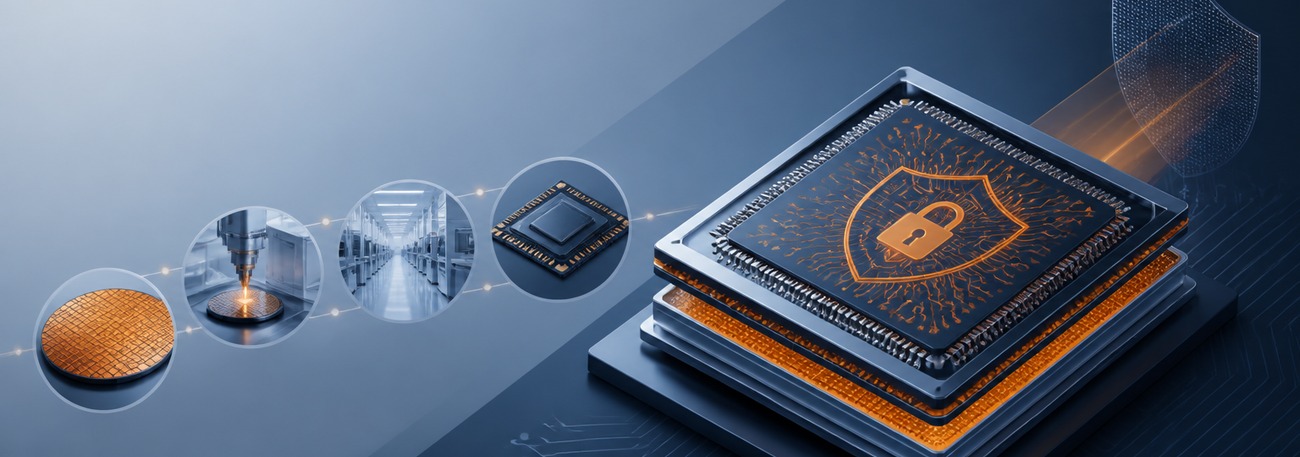
A twenty-year custom silicon strategy picks Intel 4, testing whether the node can serve designs beyond Intel's own chips, and giving Intel Foundry a named cybersecurity customer just ahead of its Q2 print.
7/27/2026
Key Highlights
- Intel and Fortinet announced a collaboration to design, package, and manufacture Fortinet's sixth-generation Security Processor (SP6) on Intel's Intel 4 process node.
- The deal marks Fortinet as the first publicly disclosed external cybersecurity customer for Intel 4.
- Fortinet has built its FortiGate firewall business around proprietary ASICs for more than two decades, positioning custom silicon as a durable differentiator against software-defined rivals.
- The announcement lands two days ahead of Intel's Q2 2026 earnings report, where investors remain focused on whether Intel Foundry's external revenue base is actually widening. The timing reads less like coincidence and more like a deliberate down payment on the foundry credibility story Intel needs to evolve going forward.
The News
On 21 July, Intel and Fortinet announced a strategic collaboration where the companies will develop Fortinet's Security Processor 6 (SP6), with Intel contributing chip design, advanced packaging, and manufacturing. This announcement expands a long-standing relationship and, according to the companies, aims to strengthen the resilience and diversity of Fortinet's global supply chain. Fortinet frames the work as an acceleration of the company's 20+ year ASIC strategy, while Intel frames it as a validation of its foundry capabilities outside the AI accelerator space. Full release: Intel Newsroom.
Analyst Take
A cybersecurity hardware vendor does not casually re-platform its most important silicon program. Fortinet's ASICs are not a component choice, they are the company's argument for why FortiGate appliances outperform rivals leaning on merchant silicon. Handing that program's next generation to Intel Foundry is a statement of confidence in Intel's execution at a moment when that confidence is still being earned quarter by quarter. The obvious read is validation: a real, named, non-AI customer lands two days before earnings, timed to shape the narrative before Intel management gets a word in. The analyst counter is that this is a single-customer commitment, not evidence of a broadening design-win pipeline. With the potential impact to Fortinet of schedule lag it would not carry with a foundry partner with a longer external track record. There is no reason why both perspectives can't be true. While the announcement is a real signal, it is also a single data point being asked to carry a lot of weight at 7nm FinFET.
What Was Announced
The core of the announcement is straightforward. Intel will handle design support, advanced packaging, and manufacturing for SP6. Intel told Tom's Hardware the chip will be built on Intel 4, an EUV 7nm node that has run almost exclusively internal Intel workloads to date. That makes Fortinet a useful early signal of whether Intel 4 can support diverse external designs rather than serve as a captive node for Intel's own product lines. Neither company's own statement names the process node directly, so this detail should be read as Intel-confirmed-to-a-reporter rather than press-release language. SP6 succeeds SP5, Fortinet's fifth-generation security ASIC, and some industry accounts suggest SP6 may move to a chiplet architecture rather than SP5's single-block design. We treat that detail as unconfirmed pending official specs, since neither company has disclosed architecture particulars, and a chiplet transition of this kind typically adds integration and packaging complexity relative to a single-block design. That is complexity that would land squarely in the manufacturing scope for which Intel is now responsible. Fortinet's ASICs split work into two families: network processors that handle packet forwarding and IPsec offload, and content processors that handle SSL/TLS inspection and intrusion detection in dedicated silicon rather than on general-purpose CPUs. That architecture is designed to let FortiGate appliances inspect encrypted traffic at line rate without the performance penalty software-based competitors absorb. Both statements from Lip-Bu Tan and Ken Xie stay carefully tentative, describing what the collaboration aims to deliver rather than what it has already achieved.
Market Analysis
Context matters here because Intel Foundry's external customer base has been thin. Q1 external foundry revenue came in at $174 million against a foundry segment doing billions in total revenue with named external logo announcements have been rare enough that each one gets outsized scrutiny. Fortinet fills that gap with a customer that is not chasing an AI accelerator narrative, which is arguably more useful to Intel's credibility than another hyperscaler chip story would be. There is also a supply chain provenance angle worth naming directly. Enterprise and government buyers increasingly write chip origin into security-appliance procurement criteria, and this deal appears explicitly designed to serve that trend, giving Fortinet an American-owned/Ireland-fabricated answer to a question its customers are asking more often.
Fortinet, for its part, reported 55% unit market share in firewalls as of its Q4 2025 results in February 2026. Numbers like that denote an installed base that makes a foundry commitment a meaningful bet rather than a marketing exercise. The competitive landscape reflects distinct architectural philosophies rather than a strict hierarchy. Palo Alto Networks emphasizes software-defined flexibility, letting new security functions ship without hardware refresh cycles. Cisco takes a platform-first approach, pairing merchant silicon with its own custom ASIC investment across Secure Firewall, optimized for deep interoperability across Cisco's much broader networking and infrastructure estate rather than for a single purpose-built appliance line. That design choice serves Cisco customers who value one integrated architecture spanning switching, routing, and security which creates a different value proposition than Fortinet's narrower bet on peak inspection throughput in a dedicated box. If SP6 lands on schedule, Fortinet extends the ASIC advantage that has anchored its margin structure. If Intel 4 execution slips, Fortinet inherits roadmap risk, and either outcome offers a data point for how peers evaluate the tradeoff between platform breadth and workload-specific silicon depth going forward. That asymmetry, upside for Intel against execution risk Fortinet now shares in, is the honest shape of the trade both companies just made.
Looking Ahead
Based on what we are observing, the more durable question is not whether this single design win matters, it is whether it is the first of several. Whether the "additional opportunities" the companies flagged for future collaboration expand into a multi-generation ASIC commitment, or stay limited to SP6, will say more about the depth of Intel's security-silicon pipeline than this announcement alone can. We will also be watching whether Intel's Q2 earnings call references named external design wins as a category, since that framing choice would suggest management sees non-AI foundry logos as a strategic talking point rather than a footnote. There is a real risk that the volume of research and commentary published in the two days between this announcement and tonight's print colors how the deal gets read, independent of its underlying merits. Observers should weigh the announcement on its own terms rather than through whatever earnings-day spin accumulates around it. As we continue evaluating Intel Foundry's turnaround thesis, we will watch for tape-out disclosures or first-silicon milestones from Fortinet over the coming quarters as the real test of whether intent has converted into execution.

Stephen Sopko | Analyst-in-Residence – Semiconductors & Deep Tech
Stephen Sopko is an Analyst-in-Residence specializing in semiconductors and the deep technologies powering today’s innovation ecosystem. With decades of executive experience spanning Fortune 100, government, and startups, he provides actionable insights by connecting market trends and cutting-edge technologies to business outcomes.
Stephen’s expertise in analyzing the entire buyer’s journey, from technology acquisition to implementation, was refined during his tenure as co-founder and COO of Palisade Compliance, where he helped Fortune 500 clients optimize technology investments. His ability to identify opportunities at the intersection of semiconductors, emerging technologies, and enterprise needs makes him a sought-after advisor to stakeholders navigating complex decisions.