











Research Finder
Find by Keyword
HYCU aiR Graph Brings AI Agent Visibility Into Enterprise Resilience
Free service maps agents, identities, privileges and application access to expose risk and protection gaps
10/07/2026
Key Highlights
- HYCU is making aiR Graph generally available as a free service for discovering AI agents and copilots and mapping their relationships with enterprise applications, identities and permissions.
- aiR Graph gives organizations visibility into agents with broad application access, write privileges, unclear ownership and other conditions that expose application data and state.
- The service connects agent discovery with application protection, allowing organizations to identify where agent access extends to applications that require recoverable state.
- HYCU extends the application-specific resilience architecture established through R-Cloud, R-Serve and aiR by mapping the agents, identities and privileges with access across enterprise application environments.
- Application environments are the new unit of resilience as business processes and AI agents work across multiple applications and systems.
The News
HYCU is making aiR Graph generally available as a free service for discovering and assessing AI agents within enterprise application environments. The service connects read-only to Microsoft Entra ID and Okta and maps agents and copilots to applications, identities, permissions and ownership. Rule-based findings identify conditions including organization-wide access, unattended access, write or delete privileges and missing ownership, while protection mapping identifies applications that HYCU R-Cloud can protect. aiR Graph is available at no cost to organizations whether or not they are existing HYCU customers. For more information, see the HYCU Newsroom for the official company press release.
Analyst Take
The enterprise application has become an application environment. A sales environment can span Salesforce, Marketo, Outlook, Teams, Zoom and messaging services, while a development environment can connect GitHub, Jira, Confluence, identity services and cloud infrastructure. Business processes already span these systems. AI agents add autonomous action through APIs and delegated identities, with privileges to read and modify application state at machine speed. HYCU says customers evaluating aiR Graph are often surprised first by the number of agents and copilots it discovers. The company describes the initial reaction as the “shock value” of the volume, followed by scrutiny of which agents have broad access, which can write data, which can interact with other agents and which lack clear ownership.
Application environments are the new unit of resilience. Restoring Salesforce, GitHub or Jira independently can recover that application's state while leaving other applications, data and dependencies at different points in the workflow. The recovery requirement extends to the relationships among applications, repositories, identities, permissions and agents that collectively define business state.
An agent with write access can alter enterprise application state across several systems during a single workflow. Resilience teams need to know which identity it used, what privileges it held, which applications it reached and what state it changed. HyperFRAME Research Lens: State of the Infrastructure & Operations (1H 2026) data shows a gap between resilience priorities and recovery confidence: 52% of I&O leaders identify cyber resilience as a leading driver of storage strategy, while only 30% are very confident in their ability to recover quickly following a cyber incident or cloud-based data loss. Agentic AI adds autonomous actors to an existing recovery-confidence gap.
aiR Graph extends the architecture we examined in our previous HYCU research. R-Cloud provides application-specific protection and recovery through modules that encode intelligence about each application's objects, relationships, dependencies and recovery requirements. R-Serve extends protection into application continuity, while aiR uses protected historical data as a source of intelligence. aiR Graph maps agents and identities with access to that application estate.
HYCU's coverage of more than 100 application and infrastructure workloads provides protection and recovery across many of the systems that compose an application environment. HYCU's decision to make aiR Graph free and available to non-customers is part of the product strategy. Organizations can discover agents, privileges and application exposure before buying HYCU protection, while the same assessment identifies exposed applications that R-Cloud can protect. The service provides immediate visibility into agent risk and a direct path from discovery to recoverable application state.
Repositories occupy a unique position in these environments. GitHub and other repositories contain data requiring protection along with source code, configuration, workflows and other artifacts used to create and modify applications. An agent with repository write privileges can alter the source of future application state as well as data in the current environment. An AI sales agent can interact with CRM, email, collaboration, marketing and communications systems during one workflow. A development agent can work across source repositories, issue tracking, documentation, identity and cloud services. Each system maintains its own state and recovery mechanisms while the agent works across them within a single workflow.
What Was Announced
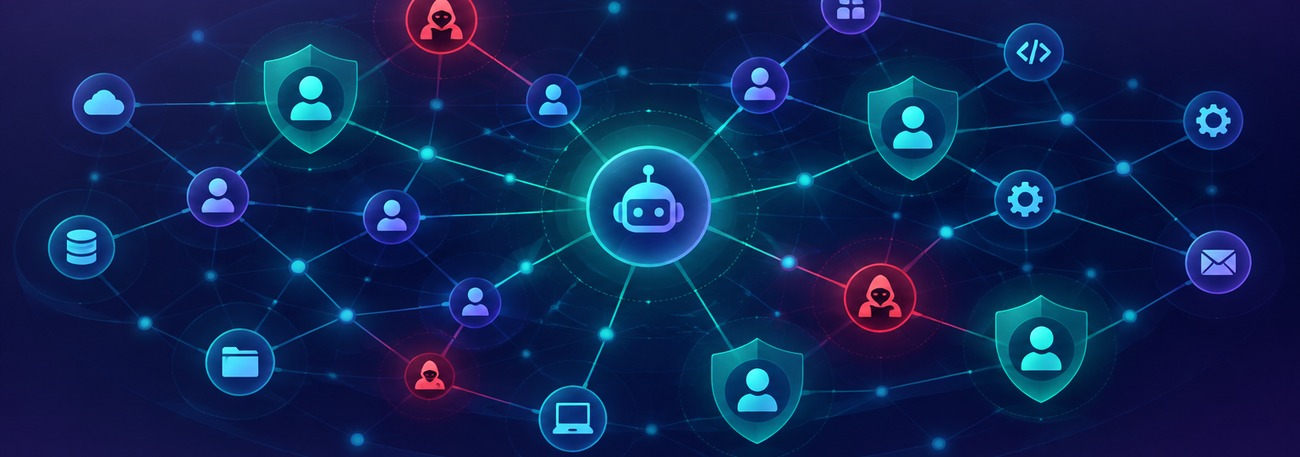
aiR Graph discovers agents and copilots and maps them against enterprise applications, identities and permissions. The service connects read-only to Microsoft Entra ID and Okta, allowing organizations to inspect the agent estate without granting aiR Graph authority to modify it. It identifies conditions that require investigation, including broad organizational access, unattended access, write privileges and agents without clear ownership.
Customers can examine which applications an agent can reach and which of those applications HYCU R-Cloud can protect. HYCU uses deterministic rules rather than language models to calculate risk findings, allowing each finding to trace back to identity-provider data and produce repeatable results. A point-in-time assessment report provides an executive summary, recommended triage actions and a full inventory for management, audit or board review. The GA follows HYCU's public preview of aiR Graph and its broader AI-resilience strategy.
HYCU has also publicly discussed a future “flight recorder” approach that would provide deeper records of agent actions and help organizations determine what changed before recovery. That capability is separate from the aiR Graph functionality entering GA.
Looking Ahead
Agent populations, identities, privileges and application relationships change as software providers add agents and enterprises create their own. Point-in-time inventory cannot establish what an agent did after discovery or account for subsequent changes in permissions and relationships. In our view, enterprises need persistent maps of agent access and historical records of activity that identify which agent acted, which identity and privileges it used, which applications it touched and what state it changed. Agent-to-agent interaction extends the requirement because the agent initiating a workflow may not be the agent that ultimately modifies an application.
aiR Graph can give customers an inventory of agent exposure and a way to prioritize protection gaps before those gaps become recovery events. For HYCU partners, the same assessment provides a way to start a resilience discussion with evidence from the customer's own environment instead of a generic backup pitch. That creates a new-account opportunity for HYCU and its partners when the assessment identifies applications and data without adequate recovery protection.
Persistent mapping and activity history can connect the actor with the affected state and establish what must be recovered. The SaaS era distributed business processes among independently managed applications and systems. Agentic AI adds autonomous action across those dependencies within a single workflow. Resilience architecture must protect and recover the application environment as a whole.

Don Gentile | Analyst-in-Residence, Data Platforms & Resiliency
Don Gentile analyzes the technologies, market dynamics, and enterprise priorities driving the AI-era data stack: the infrastructure that enables AI and the architectures that keep organizations running. His research helps technology vendors refine product strategy, strengthen market positioning, and communicate business value to enterprise customers.
Before joining HyperFRAME Research, Don held executive leadership roles at IBM and Hewlett Packard Enterprise, where he led product marketing, communications, external relations, and go-to-market strategy for enterprise infrastructure businesses. That experience informs his research, combining executive leadership with industry analysis to evaluate how technology decisions affect enterprise adoption, competitive differentiation, and long-term market direction.
Don's research practice focuses on AI infrastructure, enterprise data platforms, data architecture, control planes, enterprise storage, hybrid cloud, cyber resiliency, data protection, backup and recovery, and data governance. His work examines how these technologies enable production AI while improving governance and business outcomes.