
















Research Finder
Find by Keyword
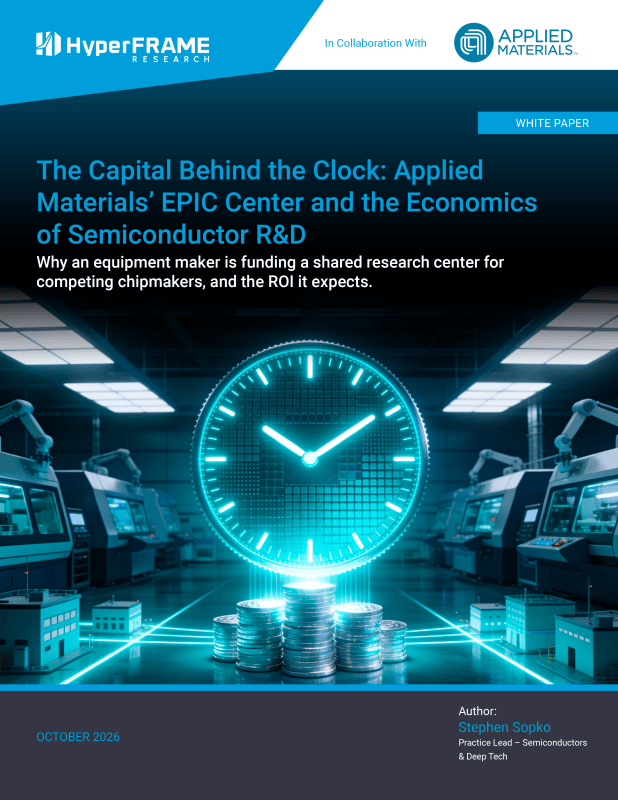
The Capital Behind the Clock: Applied Materials’ EPIC Center and the Economics of Semiconductor R&D
Why an equipment maker is funding a shared research center for competing chipmakers, and the ROI it expects.
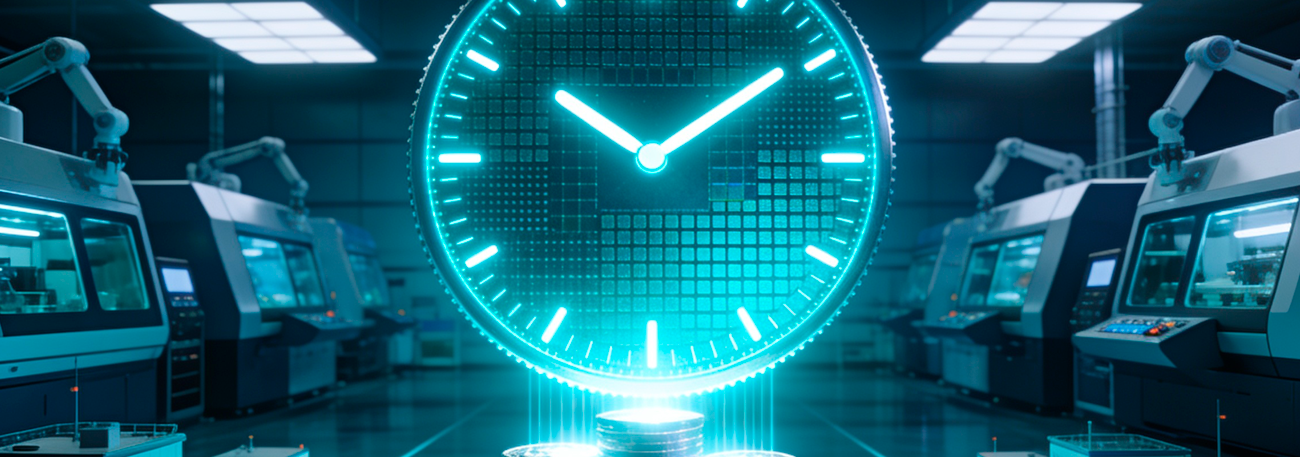
AI hardware now turns over roughly every year. The materials those chips are made from still take the better part of a decade to move from the lab to the fab. That gap sets the pace for the entire industry, and the usual explanation, that the science is simply hard, turns out to be only part of the story.
Look back at four of the defining chip transitions of the past three decades, from copper wiring to gate-all-around transistors, and a pattern appears. The new material was rarely the hardest part. The hardest part was getting it to yield at volume, and that work fell between organizations: university labs, equipment makers, chipmakers' integration teams and the fab, each with its own budget, incentives and definition of "done."
Time is lost every time work crosses one of those lines. Some of that loss is familiar, like rework and requalification. Some is quieter, like a specification that means something slightly different by the time it reaches the next team. And one cost almost never shows up in any metric: years of careful research spent on a material the fab was never going to accept.
Applied Materials' EPIC Center, unveiled this October, is a direct bet against that problem. Over a dozen industry leaders like TSMC, Intel, Samsung, SK hynix and Micron have signed on as partners, alongside equipment makers and leading research universities. The most revealing commitment, though, may come from Broadcom which joined the roster as a chip designer who may never buy a machine from Applied.
In this paper, HyperFRAME Research takes the model apart:
- The handoff problem. Why the costliest delays in semiconductor R&D sit at the joins between organizations, not inside the labs.
- Hub versus network. How EPIC differs from the lab expansions announced by Lam Research and Tokyo Electron, and why they may be solving different problems.
- The founding roster. What it tells us that fierce competitors agreed to bring engineers under one roof, and which partner says the most about where this is heading.
- The capital question. Whether Applied is underwriting its customers' R&D or buying a position it can't get any other way, and what pharmaceutical R&D suggests about how the return might show up.
- What has to go right. A full-strength look at confidentiality, concentration, measurement lag and competitive response, plus five signposts to watch over the next several years.

Stephen Sopko | Analyst-in-Residence – Semiconductors & Deep Tech
Stephen Sopko is an Analyst-in-Residence specializing in semiconductors and the deep technologies powering today’s innovation ecosystem. With decades of executive experience spanning Fortune 100, government, and startups, he provides actionable insights by connecting market trends and cutting-edge technologies to business outcomes.
Stephen’s expertise in analyzing the entire buyer’s journey, from technology acquisition to implementation, was refined during his tenure as co-founder and COO of Palisade Compliance, where he helped Fortune 500 clients optimize technology investments. His ability to identify opportunities at the intersection of semiconductors, emerging technologies, and enterprise needs makes him a sought-after advisor to stakeholders navigating complex decisions.