









Research Finder
Find by Keyword
Observability in the Age of Generative and Agentic AI
Why AI complexity requires a different observability approach.
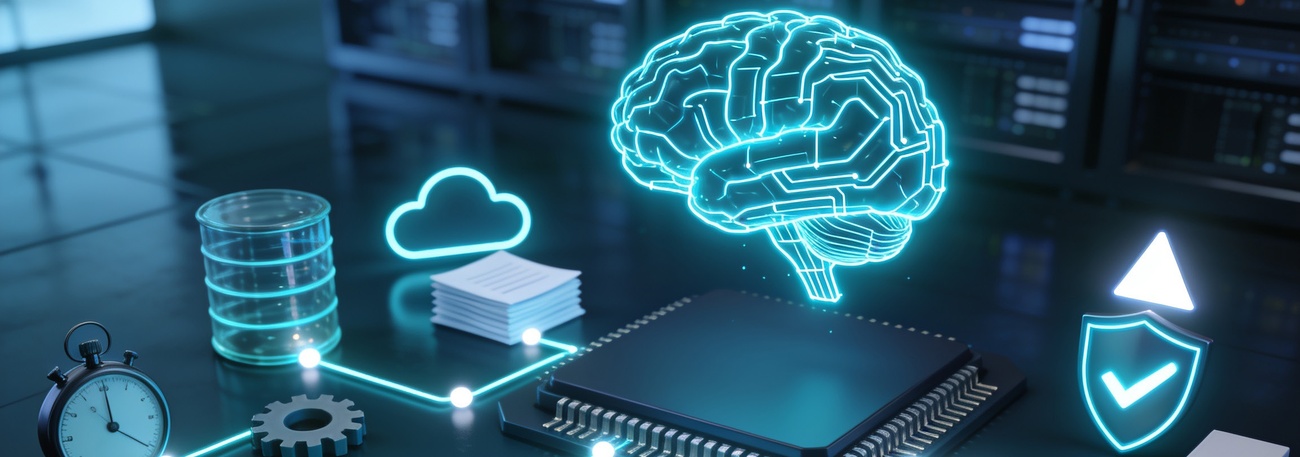
An AI application can respond quickly, return a successful status code, and still produce the wrong result. As agents retrieve data, select models, and act across business systems, enterprises need visibility into both how a workflow runs and whether it produces an acceptable outcome. This paper examines why generative and agentic AI require observability across prompts, models, tools, applications, and infrastructure. It outlines how early instrumentation, evaluations, and correlated telemetry help teams investigate failures, manage cost, and support governance. It also explores Dynatrace’s approach to connecting AI activity with operational context and how Arize’s evaluation and experimentation capabilities can support improvement across the AI lifecycle.
Key Takeaways
- Availability Does Not Establish AI Reliability: A model or service can appear healthy while producing inaccurate, unsafe, or irrelevant responses. Enterprises need to assess quality, performance, cost, and risk together to determine whether an AI workflow is working as intended.
- Agentic Workflows Require Visibility Across the Stack: Model calls alone cannot explain an outcome. Teams need to trace retrieval, tool use, agent handoffs, and downstream dependencies to understand where a workflow failed and what it affected.
- Instrumentation Must Begin Before Production: Prompts, model versions, retrieved context, tool calls, and evaluation results provide the evidence needed to investigate AI behavior. Capturing these signals during system design reduces gaps that become difficult to resolve after deployment.
- AI Economics Must Be Tied to Outcomes: Token counts and infrastructure spending provide only part of the picture. Enterprises should connect model selection, retries, retrieval quality, and agent path length to the cost of completing a task successfully.
- Dynatrace and Arize Connect Operations With AI Improvement: Dynatrace provides application, infrastructure, and dependency context, while Arize contributes evaluations and experimentation workflows. As integration progresses, connecting these capabilities can help teams turn production findings into tests, compare potential fixes, and assess whether changes improve AI quality and reliability.

Stephanie Walter | Practice Leader - AI Stack
Stephanie Walter is a results-driven technology executive and analyst in residence with over 20 years leading innovation in Cloud, SaaS, Middleware, Data, and AI. She has guided product life cycles from concept to go-to-market in both senior roles at IBM and fractional executive capacities, blending engineering expertise with business strategy and market insights. From software engineering and architecture to executive product management, Stephanie has driven large-scale transformations, developed technical talent, and solved complex challenges across startup, growth-stage, and enterprise environments.

Steven Dickens | CEO HyperFRAME Research
Regarded as a luminary at the intersection of technology and business transformation, Steven Dickens is the CEO and Principal Analyst at HyperFRAME Research.
Ranked consistently among the Top 10 Analysts by AR Insights and a contributor to Forbes, Steven's expert perspectives are sought after by tier one media outlets such as The Wall Street Journal and CNBC, and he is a regular on TV networks including the Schwab Network and Bloomberg.